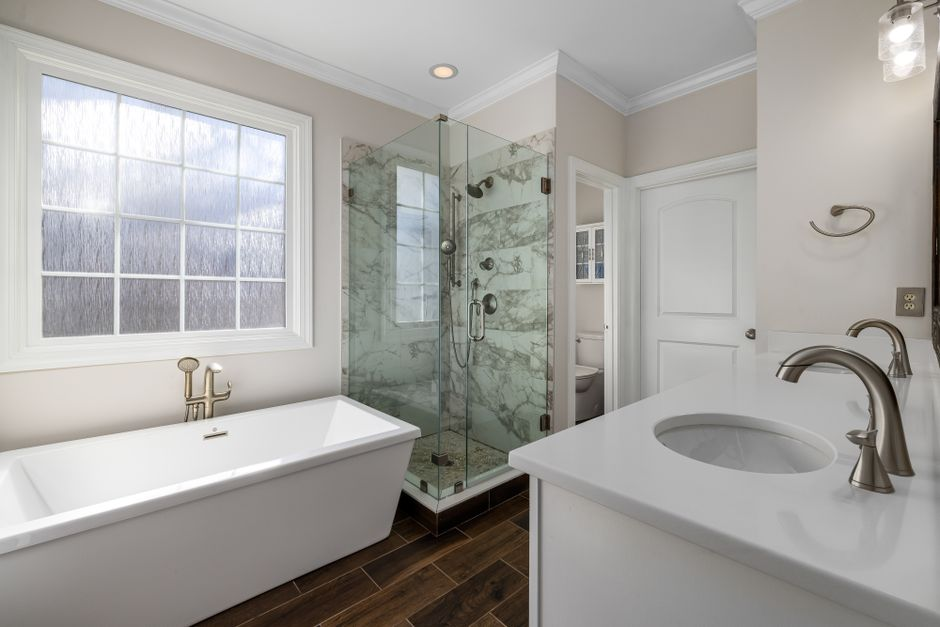
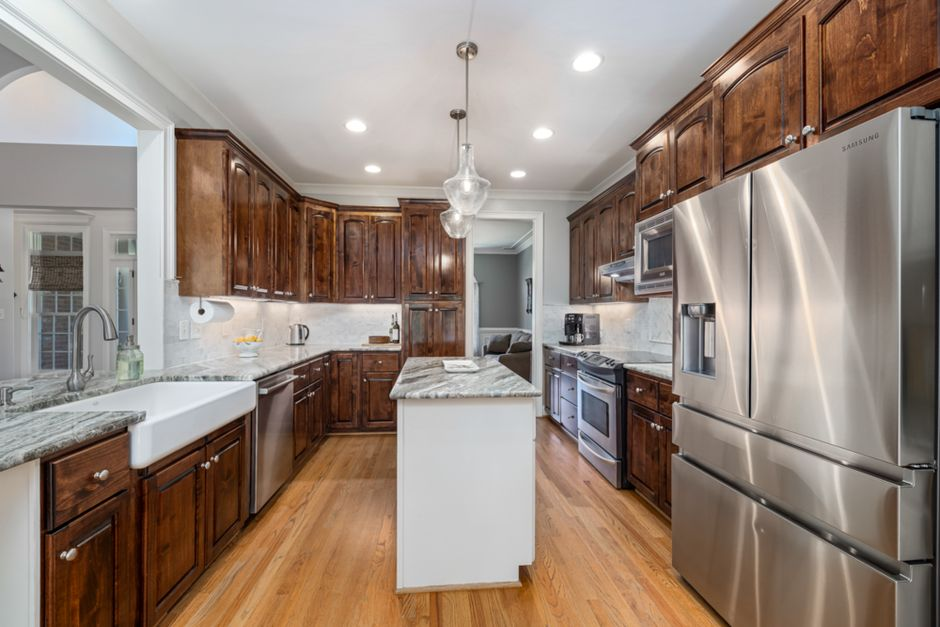
It usually starts as a simple plan. A homeowner in Orange County wants to freshen up the kitchen with new counters, painted cabinets, and better lighting. Then the island feels too small, the wall to the dining area suddenly seems worth opening up, the appliance package gets upgraded, and an electrician discovers the existing setup is not ready for what the new kitchen needs. What looked like a straightforward update begins to behave like a full renovation.
We see that turning point all the time. In Orange County, kitchen budgets tend to fall into clear tiers, and the biggest jumps usually come from scope decisions rather than square footage alone. A true budget conversation is less about chasing a single average and more about understanding which choices keep a project in refresh territory and which ones move it into full-remodel or custom pricing.
Not sure if your project is a refresh or a full remodel?
Before numbers start drifting, get clarity on scope, layout changes, permitting needs, and the decisions most likely to affect your budget. OC Builders Group helps homeowners plan smarter from the start.
| Project tier | Typical scope | How it behaves |
|---|---|---|
| Cosmetic refresh | Keep the layout, update surface finishes, replace some fixtures and lighting, possibly improve countertops or backsplash | Lower disruption, fewer hidden conditions, usually no major utility relocation |
| Full remodel | New cabinetry, new surfaces, upgraded lighting, appliance changes, more meaningful electrical or plumbing work, selective layout changes | Most common tier where budgets jump because coordination and code requirements increase |
| High-end or custom renovation | Major reconfiguration, structural work, custom cabinetry, premium appliances, expanded island, integrated design details, extensive finish upgrades | Higher planning demands, longer lead times, tighter detailing, more risk if scope is not defined early |
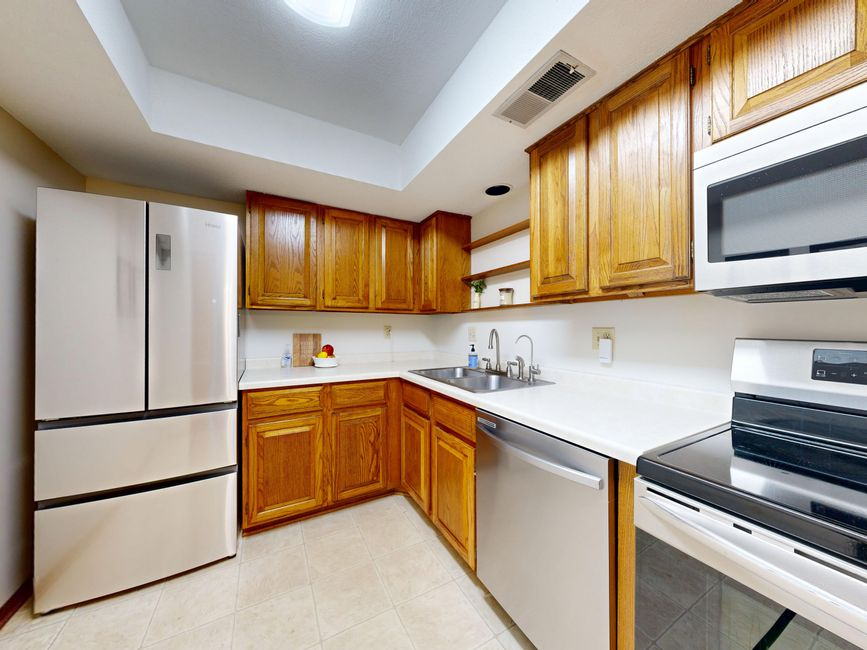
A cosmetic refresh is what many homeowners think they are starting with. The basic footprint stays put. Sink, range, and major walls remain where they are. The goal is visual improvement and better day-to-day use without rebuilding the kitchen from the inside out. In Orange County homes, that can still look beautiful, but it only stays in this category if the decisions remain disciplined.
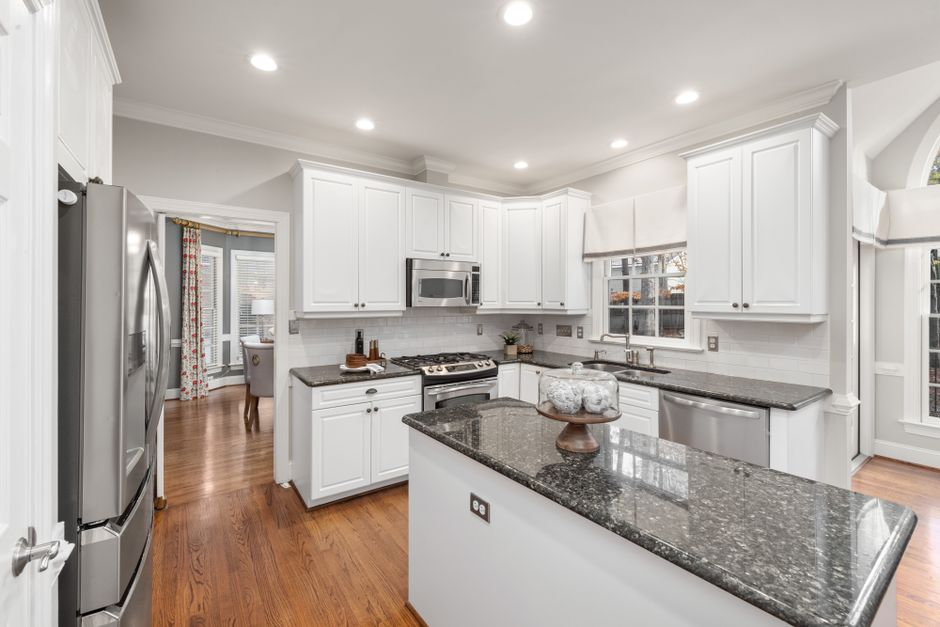
A full remodel is where we begin to replace the working parts of the kitchen, not just the visible ones. Cabinets are often fully replaced rather than refinished. Lighting gets redesigned rather than swapped one-for-one. Appliances may require new circuits, ventilation changes, or gas adjustments. The island may grow. Storage improves. The room starts performing differently, not just looking newer.
The high-end or custom tier is less about extravagance for its own sake and more about complexity. This is where kitchens are opened to adjacent living spaces, walls are removed or reworked, cabinetry is tailored to the home, appliance packages become more specialized, and every finish decision is expected to feel intentional. In Orange County, this tier is common in homes where the kitchen has to align with a broader whole-home standard rather than stand alone as a single-room update.
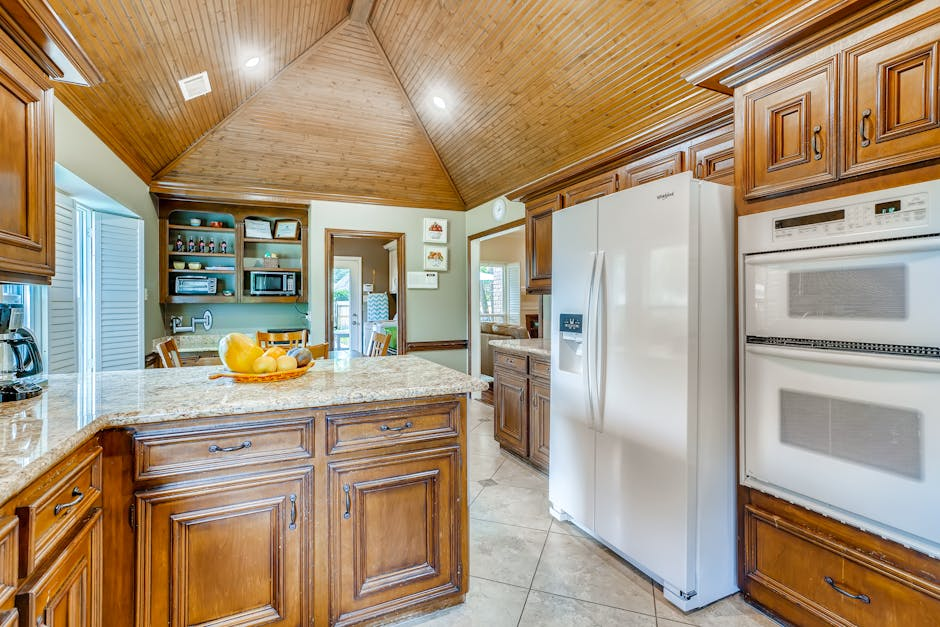
If we had to point to the handful of decisions that move a kitchen into the next cost bracket, layout changes would be near the top of the list. Keeping plumbing, gas, and major appliances in place is one thing. Moving them is another. The moment the sink, range, or refrigerator line shifts significantly, you are no longer paying only for finishes. You are paying for coordination, rough work, patching, inspections, and often schedule complexity.
Cabinetry is another major divider. There is a large difference between a kitchen built around basic stock options and one built around semi-custom or fully custom cabinetry. The jump is not just about materials. It is also about sizing flexibility, storage accessories, finish quality, installation precision, and how well the cabinets solve the room’s specific constraints.
Appliances can quietly reset the budget too. A standard replacement package behaves very differently from a kitchen built around larger professional-style appliances, panel-ready integration, a stronger hood system, or specialty additions like beverage refrigeration. Appliance selections often trigger companion costs in electrical, ventilation, millwork, and clearances that homeowners do not see in the first conversation.
Then there is the infrastructure behind the walls. Older kitchens may need more circuits, GFCI protection, lighting redesign, outlet updates, plumbing revisions, or gas line changes. If the existing electrical panel is already near capacity, a kitchen project can expose a bigger house-wide issue. That is why a low early number can feel appealing until real field conditions enter the picture.
Finish upgrades also create sharp jumps, especially when several happen at once. A single premium choice may be manageable. But when the project stacks custom cabinets, waterfall countertops, designer fixtures, wide-plank flooring transitions, specialty tile work, and tailored lighting, the budget rarely climbs in a straight line. It compounds.
A simple way to think about the total
We encourage homeowners to think of a kitchen budget as a base scope plus decision layers. The base scope covers the core work required to deliver a complete, functional kitchen at the chosen level. The layers are the choices that expand complexity: moving walls, relocating utilities, upgrading cabinet construction, increasing appliance demands, or selecting more labor-intensive finishes.
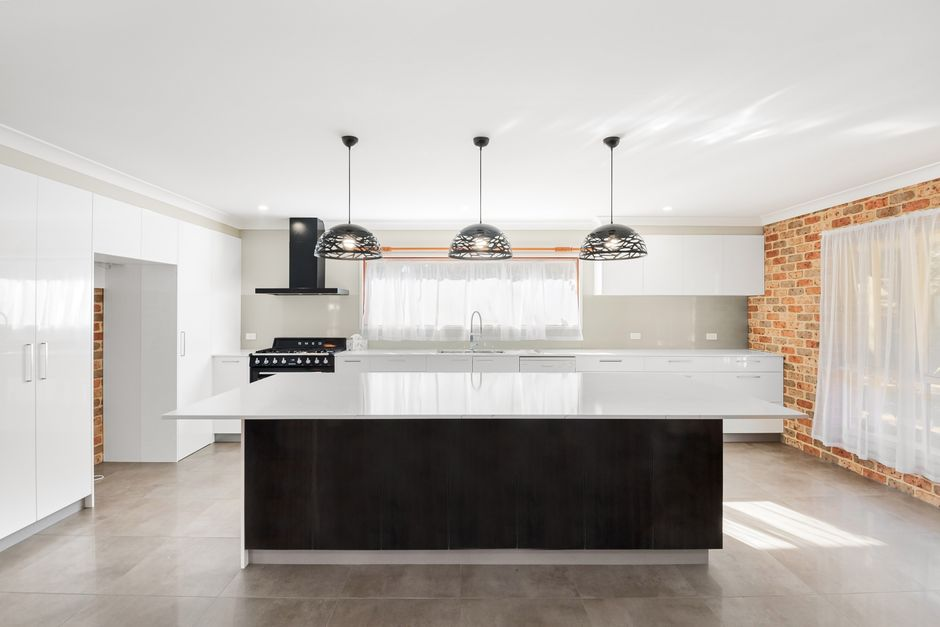
For example, imagine a homeowner begins with a straightforward plan: replace cabinets, counters, backsplash, fixtures, and lighting while keeping the general layout intact. That may behave like a controlled full remodel. But then the island is enlarged, the sink moves into that island, better ventilation is added for a more powerful range, under-cabinet lighting becomes part of the design, and the dining-side wall is opened for better flow. On paper, those can sound like a few smart improvements. In practice, they stack structural review, utility changes, finish coordination, and permit-related scope into the same project. That is exactly how a moderate kitchen starts moving toward a much higher tier.
Where the budget usually goes
| Budget category | Typical role in the project |
|---|---|
| Cabinetry and installation | Often the largest share because it affects layout, storage, finish level, and labor precision |
| Labor and project coordination | Demolition, carpentry, installation, site management, sequencing, and quality control |
| Countertops and backsplash | Material choice, edge details, fabrication complexity, and slab yield all matter |
| Appliances and ventilation | Ranges, refrigeration, dishwashers, hoods, and any special power or venting needs |
| Plumbing and electrical | Fixture hookups, circuit additions, lighting plans, code updates, and relocations |
| Permits and inspections | Especially relevant when systems, walls, or structural elements are touched |
| Contingency | Protection against hidden conditions, field changes, or justified scope adjustments |
That breakdown is one reason headline pricing can be misleading. Two proposals may both say “kitchen remodel,” but one may assume basic appliance connections and limited electrical work, while the other includes lighting redesign, permit coordination, cabinetry details, and a realistic contingency for an occupied home. The totals will not behave the same because the scopes are not truly the same.
The costs many homeowners do not see coming
Invisible costs are where budgeting often goes off track. In Orange County, permitting and code-related requirements matter, particularly when electrical, plumbing, gas, ventilation, or structural elements are part of the work. A homeowner may feel they are paying for a prettier kitchen, but a meaningful portion of the investment can go toward making the new kitchen safe, compliant, and buildable.
Occupied-home logistics also deserve more attention than they usually get. A kitchen renovation does not happen in a vacuum. Families still need to live in the house, protect adjacent finishes, manage dust, and work around temporary cooking arrangements. Careful scheduling and disruption control are part of the real cost of doing the job well, even if they are not the glamorous line items.
Lead times can have financial effects too. Custom cabinetry, specialty appliances, and stone procurement can influence start dates, sequencing, and storage decisions. When selections are not made early, projects are more vulnerable to delays and change orders. That is one reason national averages rarely tell the whole story for Orange County homeowners with higher finish expectations and more customized goals.
How to compare quotes without getting fooled by a low number
When homeowners gather proposals, the lowest figure often looks tempting because it creates the illusion of savings before construction begins. But kitchens are one of the easiest places to hide cost in allowances, exclusions, and vague scope language. We always recommend comparing what is actually included, not just what is printed in bold at the bottom.
- Check allowances carefully, especially for cabinets, countertops, tile, fixtures, and appliances.
- Ask what is excluded: permits, design revisions, demolition disposal, patching, painting, or utility upgrades.
- Confirm whether the layout shown assumes any plumbing, gas, or electrical relocation.
- Review change-order exposure by asking which conditions are unknown versus already investigated.
- Compare timeline realism, including procurement for cabinetry, slabs, fixtures, and appliances.
A transparent design-build process tends to make this comparison easier because design intent, selections, permitting, and construction assumptions are developed together rather than left fragmented across separate parties. That integration does not eliminate every unknown, but it does reduce the chance that a low proposal becomes expensive later.
Common questions we hear
Do I need permits for a kitchen renovation in Orange County?
If the work goes beyond surface-level replacement, permits are often part of the process. Electrical, plumbing, gas, ventilation, and structural changes can all trigger permit requirements. Even when the kitchen looks straightforward from the outside, the work behind walls may place it firmly in permit territory.
Can I renovate a kitchen in phases to control cost?
Sometimes, yes, but phasing is not always the money-saver people hope for. If the later phase reopens finished work or delays key coordination decisions, the total cost can rise. Phasing works best when the scope lines are genuinely clean and the first phase does not compromise the long-term plan.
How long should I expect a kitchen project to take?
The answer depends heavily on planning depth, permitting, and procurement. A kitchen with layout changes, custom cabinetry, or specialty materials will naturally take longer than a straightforward replacement project. In our experience, the cleaner the preconstruction process, the more reliable the build schedule becomes.
Why do two kitchen bids differ so much?
Usually because they are not pricing the same assumptions. One proposal may carry realistic allowances, include permit coordination, and account for code updates or detailed installation. Another may leave those items unresolved. The lower bid is not always cheaper; sometimes it is simply less complete.
The safest next step is clarity before construction
The smartest kitchen budget is not the one with the lowest opening number. It is the one that reflects your real scope, your home’s actual conditions, and the level of finish you expect to live with for years. In Orange County, where kitchens often involve layout improvements, elevated finishes, and permit-sensitive work, integrated planning is what keeps the budget from drifting.
That is why we favor a design-build approach at OC Builders Group. When design, budgeting, permitting, and construction are aligned under one accountable team, we can define scope earlier, flag the decisions most likely to cause price jumps, and help you compare investment against outcomes with much more confidence. If you are trying to decide whether your project is still a refresh or already a full renovation, that clarity is where the real savings begin.
Ready to plan your kitchen renovation with real numbers?
If you want a realistic budget based on your home’s actual conditions, finish level, and layout goals, OC Builders Group can help you evaluate scope before construction begins. A design-build process makes it easier to compare options, avoid hidden costs, and move forward with confidence.