Kitchens date faster than almost any other room. A space that read as polished and custom five years ago can feel noticeably outdated today. The best kitchen remodel ideas in 2026 move past surface refreshes and address the structural, material, and spatial decisions that actually hold their value.
So, in this article, we will cover ten specific upgrades suited to Orange County’s high-end residential market, each chosen for aesthetic staying power and practical return.
Key Takeaways
- Open-concept wall removal is one of the highest-impact kitchen remodel ideas in 2026, but the structural work behind it is where the real value is earned.
- Natural stone countertops with bold veining are setting the standard for the luxury kitchen aesthetic this year.
- White oak cabinetry now outpaces painted finishes among professional designers, and the data behind that shift is worth knowing.
- Two-tone cabinet schemes deliver serious character without requiring a full structural renovation.
- Statement range hoods have become the design detail most professionals address first.
- Layered lighting separates a polished kitchen from a merely renovated one.
- Panel-ready appliances are worth the upgrade, and smart integration makes them worth seeing.
- Warm, earthy palettes are replacing cold whites, and they hold up better at resale.
- The workstation sink may be the most underrated upgrade on this list
1. Open-Concept Layout
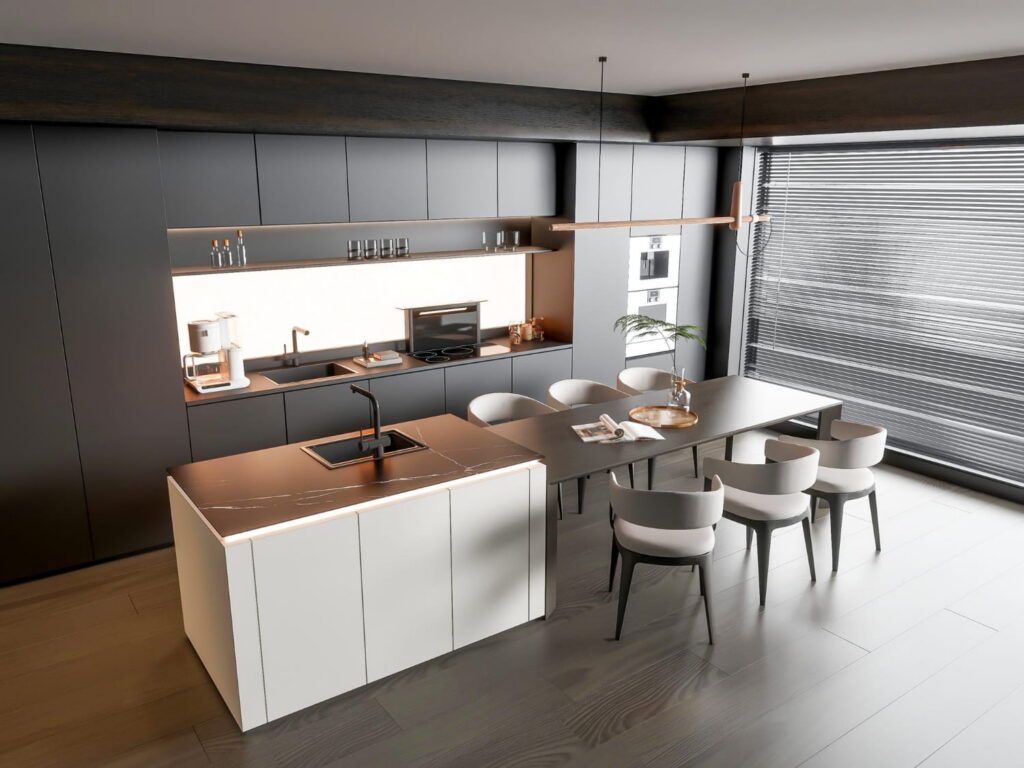
Removing a wall between the kitchen and the adjacent living or dining area remains one of the most requested kitchen renovation ideas across Orange County. The spatial effect is immediate: natural light reaches previously blocked areas, the cook stays connected to the rest of the house, and the entire ground floor reads as a cohesive, flowing space.
This particular kitchen remodel idea carries more structural weight than its finished photos suggest. Most walls dividing kitchens from living areas are load-bearing, so the proper execution requires:
- A structural assessment to identify the wall type.
- Engineering calculations for the replacement beam or header.
- Local building permits from the municipal building department.
- MEP line rerouting where gas, plumbing, or electrical runs through the wall.
Done correctly, the result is a kitchen that reads far larger without gaining a single square foot. Skipped or rushed, it creates liability that resurfaces at resale.
2. Statement Stone Countertops
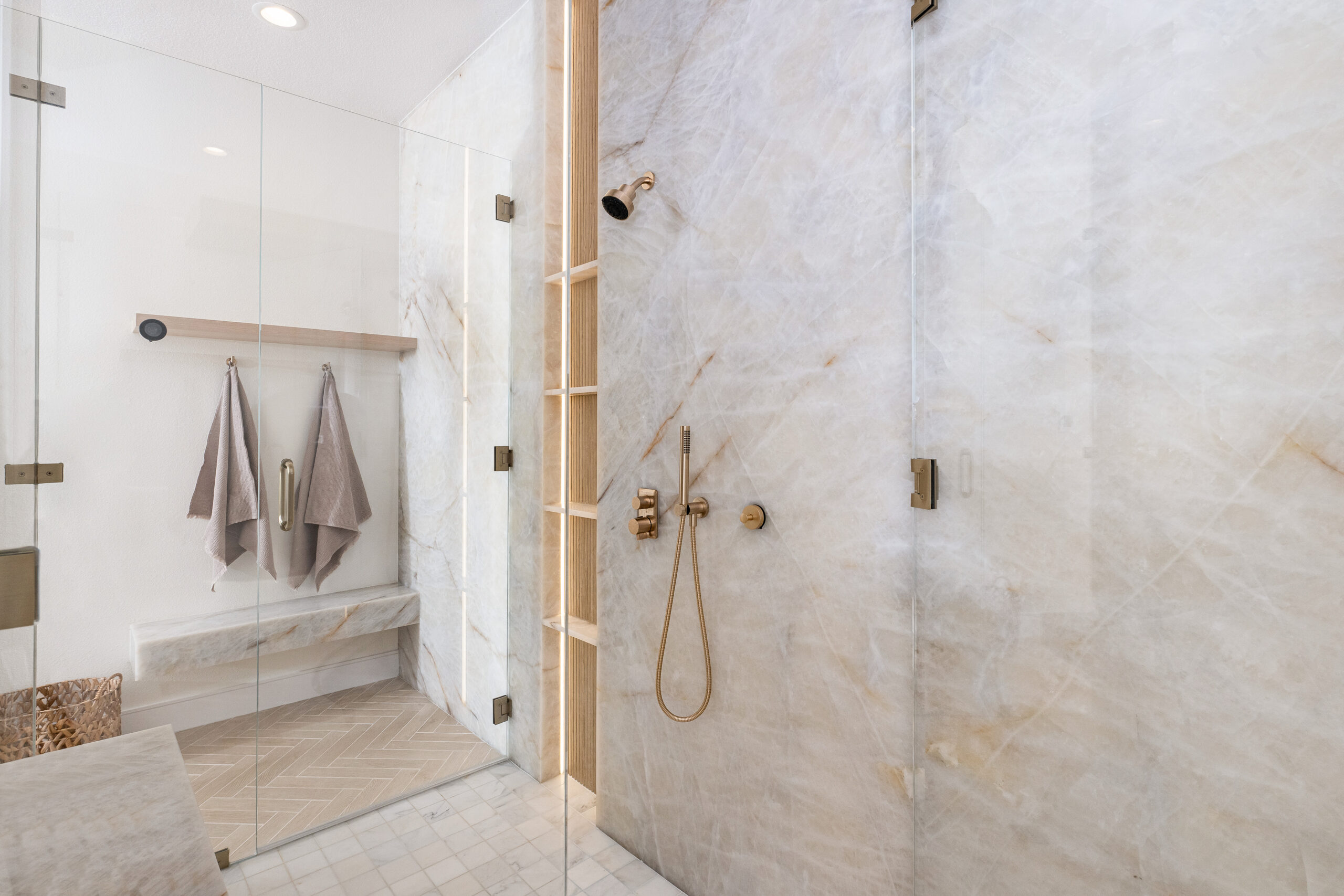
Natural quartzite is the leading countertop selection in 2026. Sixty-two percent of designers specify it for its organic veining, heat resistance, and the way a well-chosen slab becomes the visual anchor of the entire kitchen.
Current kitchen remodeling trends point in one direction: away from uniform, low-variation surfaces toward stone with genuine geological character. Bold veining, deep color contrasts, oversized vein structures that span the full island length. Some installations go further with book-matched slabs, where two adjacent pieces mirror each other across a central seam.
Worth knowing: quartzite and quartz are not the same material. Quartzite is a natural stone, mined and cut. Quartz is engineered. Both perform well, but they look noticeably different in a finished luxury kitchen and land at different price points.
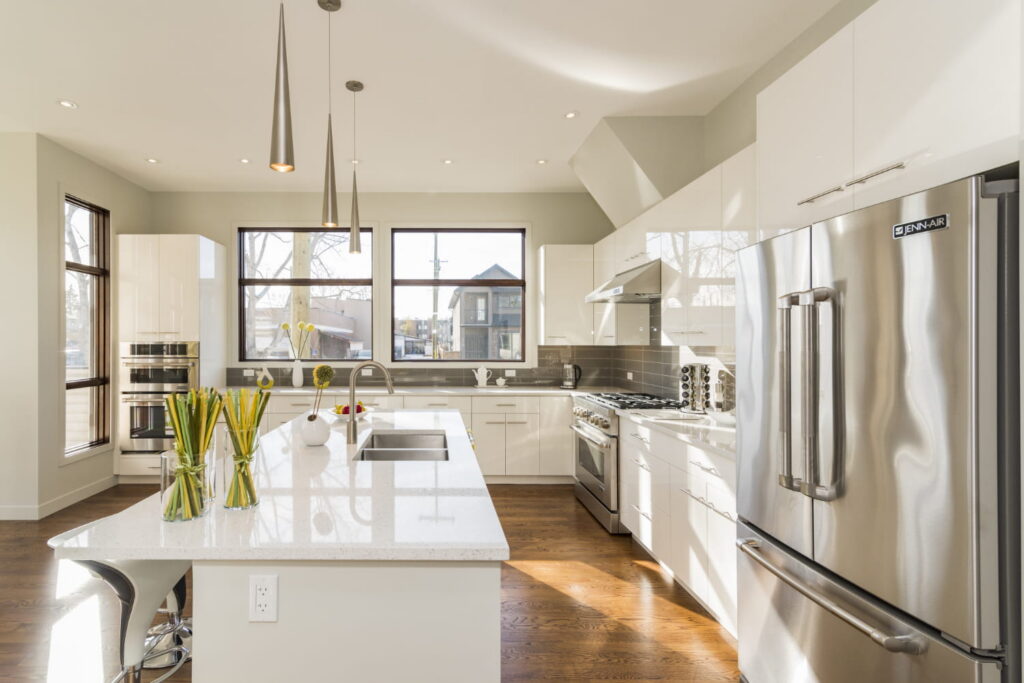
Installation formats to consider:
- Waterfall edge: countertop material cascades down the island sides, creating a continuous vertical surface.
- Full-height slab backsplash: stone runs uninterrupted from counter to upper cabinets, eliminating grout lines entirely.
- Book-matched installation: two slabs positioned symmetrically so the veining mirrors across the seam.
Installed costs range from $70 to $150 per square foot, depending on material, edge profile, and slab complexity.
3. White Oak and Natural Wood Cabinetry
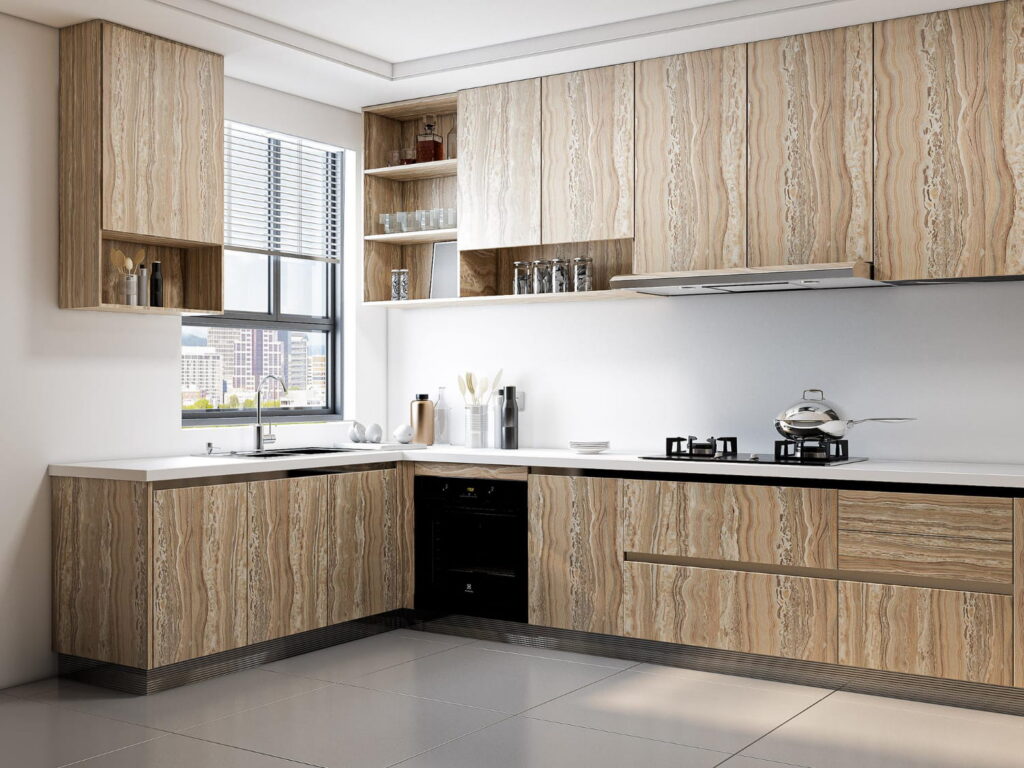
White oak has overtaken painted finishes as the top cabinet choice in 2026. Fifty-nine percent of designers now specify wood grain over paint, with white oak leading at 51%.
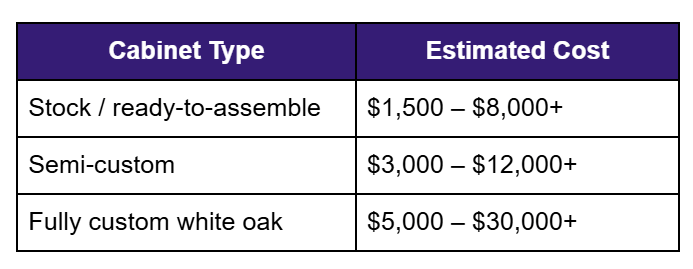
The shift away from painted cabinets marks one of the clearer changes in kitchen remodel ideas over the past few years. White oak’s light tone and open grain work well across both warm and cool palettes. Flat-slab door profiles, the most popular cabinet style at 69% of projects, let the wood’s texture show without ornamental distraction.
The result is a luxury kitchen that feels warm and considered rather than staged.
For homeowners who want more depth, walnut and dark-stained oak are gaining ground. Richer in tone with tighter grain patterns, they suit kitchens where the cabinetry is meant to ground the room without competing with the countertop.
Installation labor adds $50 to $450+ per linear foot on top of material costs.
4. Multifunctional Island Design
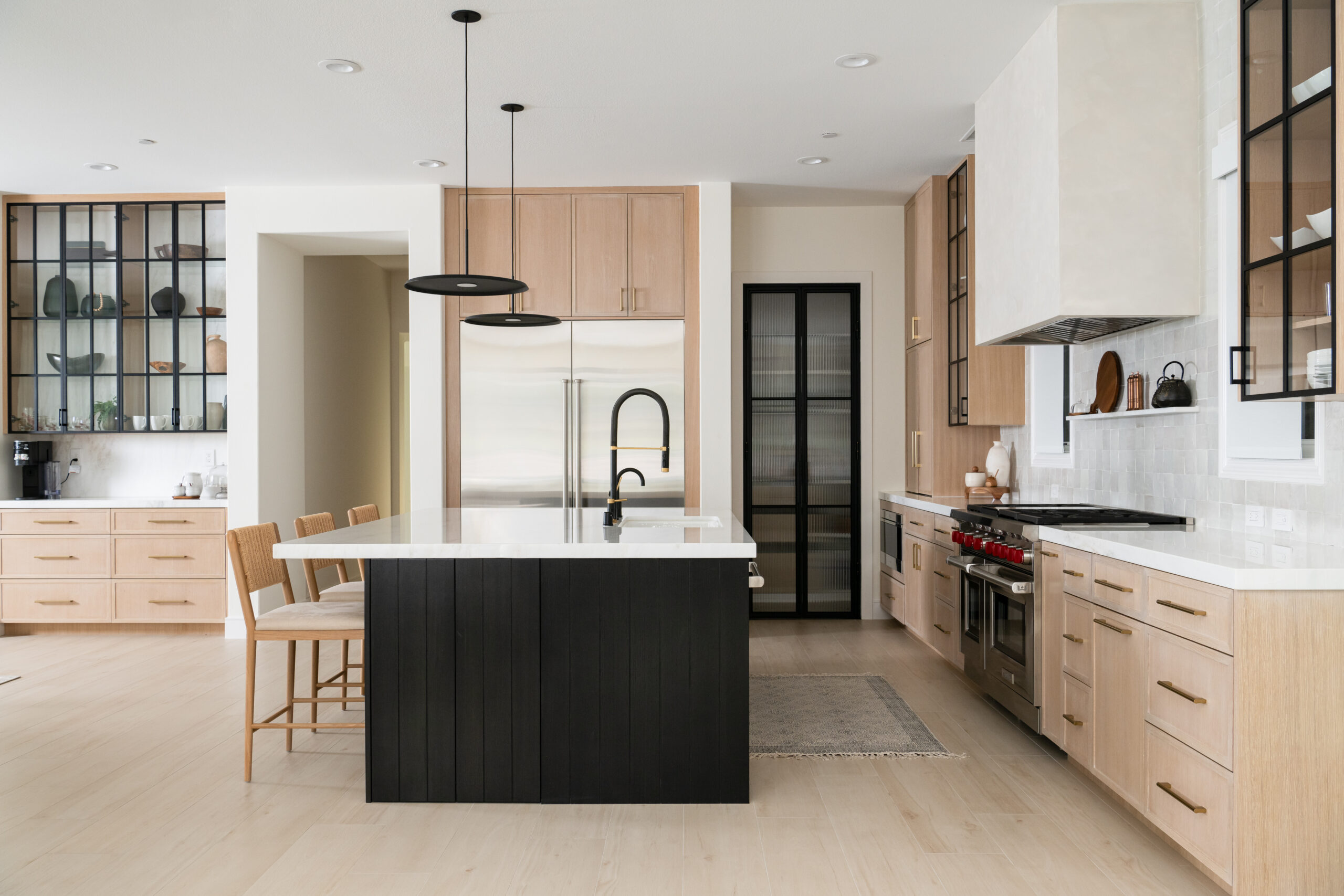
Today’s kitchen island handles prep, storage, seating, and plumbing in one footprint. The 2026 version goes further by splitting the island into two working zones: one for active cooking and prep, the other for serving and gathering.
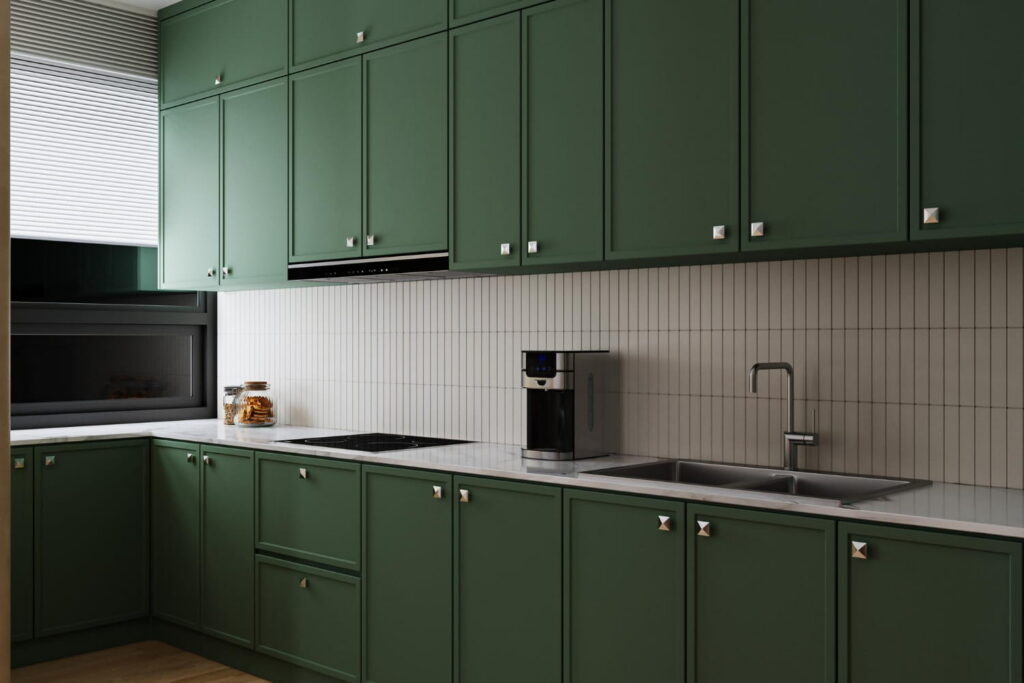
Common island features:
- A prep sink, keeping the main sink free during cooking
- Bar seating on the social-facing side
- Concealed storage below: pull-out drawers, bottle racks, or a second dishwasher
- Curved or rounded profiles, which soften the room and improve traffic flow
One planning note: adding plumbing to an island that didn’t previously have it requires relocating supply and drain lines beneath the floor. This is a structural decision that belongs in the design phase, not during construction. Getting it into the blueprints early keeps the budget and the schedule intact.
For larger kitchens, a two-island layout splits the functions entirely. One island for cooking and prep, one dedicated to seating and serving. It’s one of the more requested kitchen renovation ideas in high-end luxury kitchen builds.
5. Two-Tone Cabinet Schemes
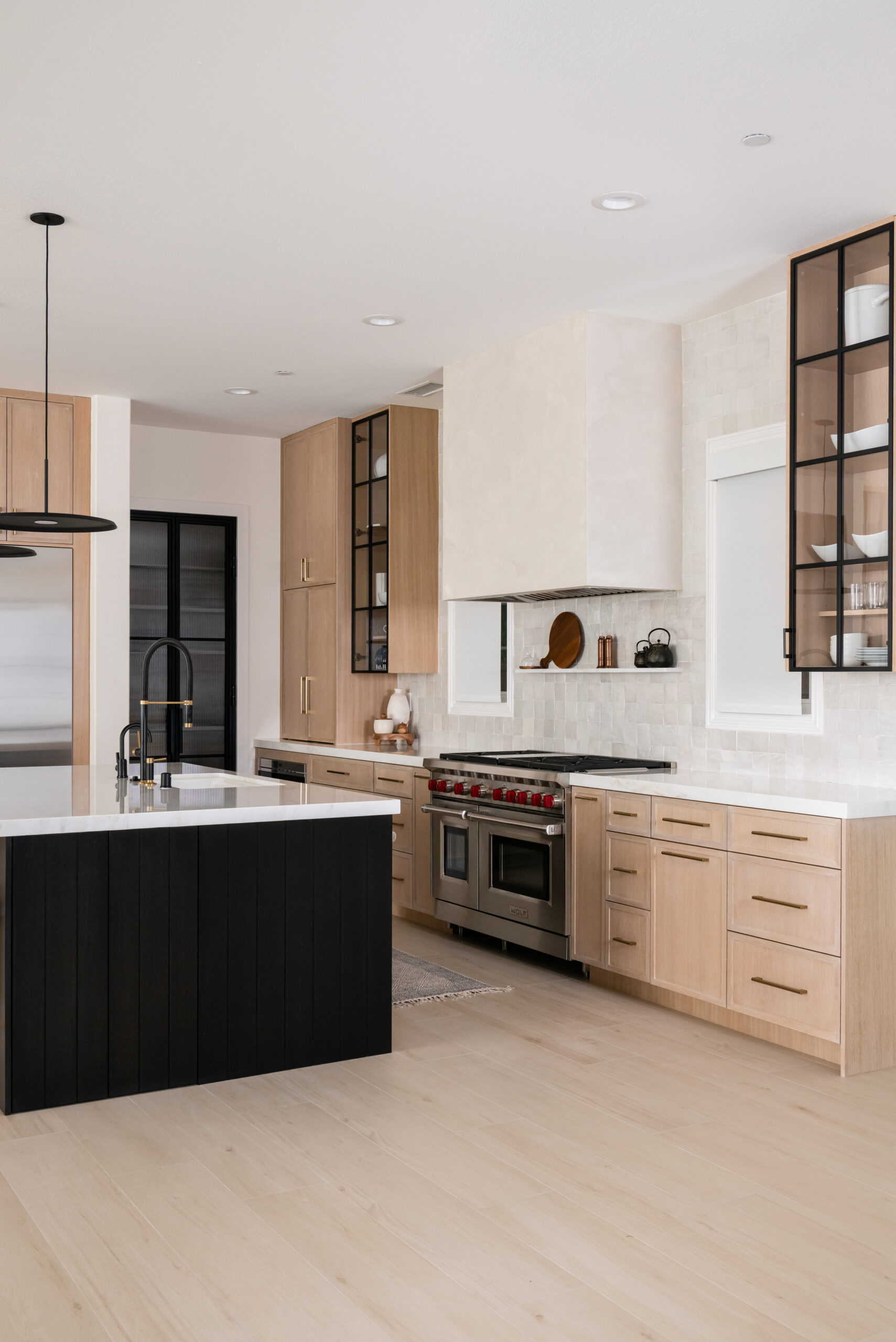
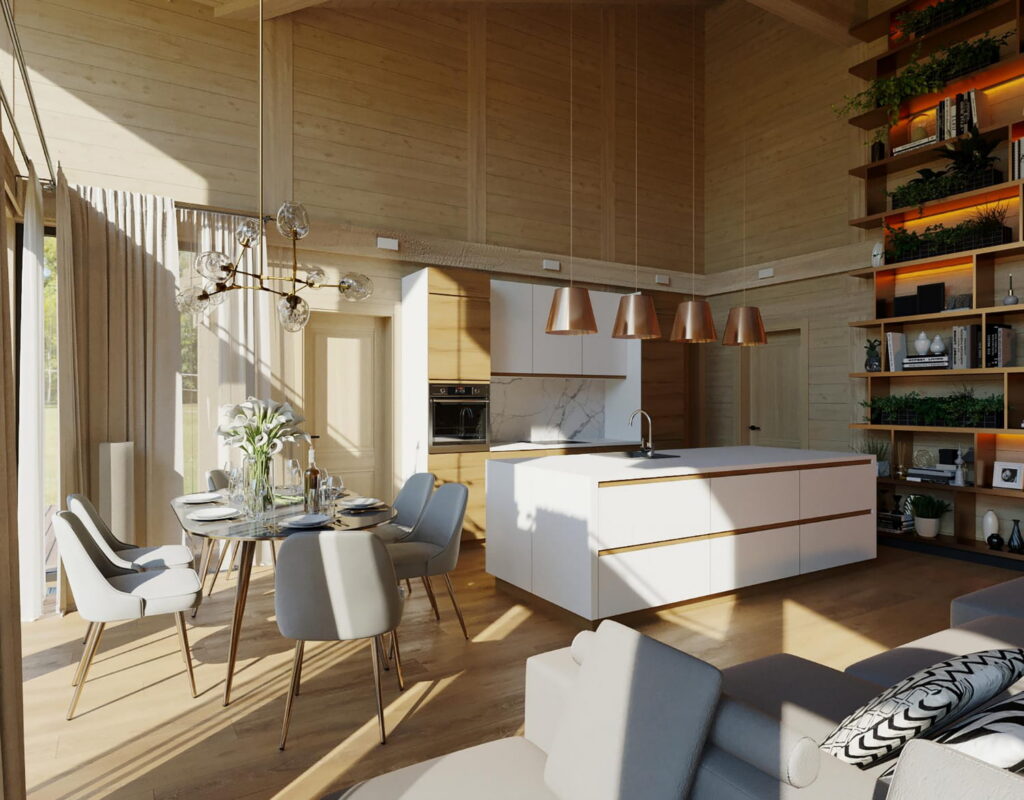
Two-tone cabinetry is a kitchen remodel idea that holds up over time when the color pairing is chosen deliberately. The 2026 pairing: darker, richer tones on the lower cabinets, lighter finishes on the uppers. The contrast creates a visual hierarchy instead of a flat, uniform wall of color.
Popular lower cabinet colors this year include forest green, navy, charcoal, and matte black. Each pairs naturally with warm white or off-white uppers without competing for attention.
Color placement options:
- Lower cabinets + light uppers: the most common configuration, grounding the room and keeping it open.
- Island as the accent: a single bold color on the island with neutral cabinets throughout.
- Hood as the statement: painting or cladding the range hood in the accent color, with all cabinetry kept consistent.
Hardware ties the scheme together. Unlacquered brass, matte black, and polished nickel are the finishes showing up most in 2026. Treat hardware as the detail that confirms the color decision rather than one made separately.
6. Custom Statement Range Hood
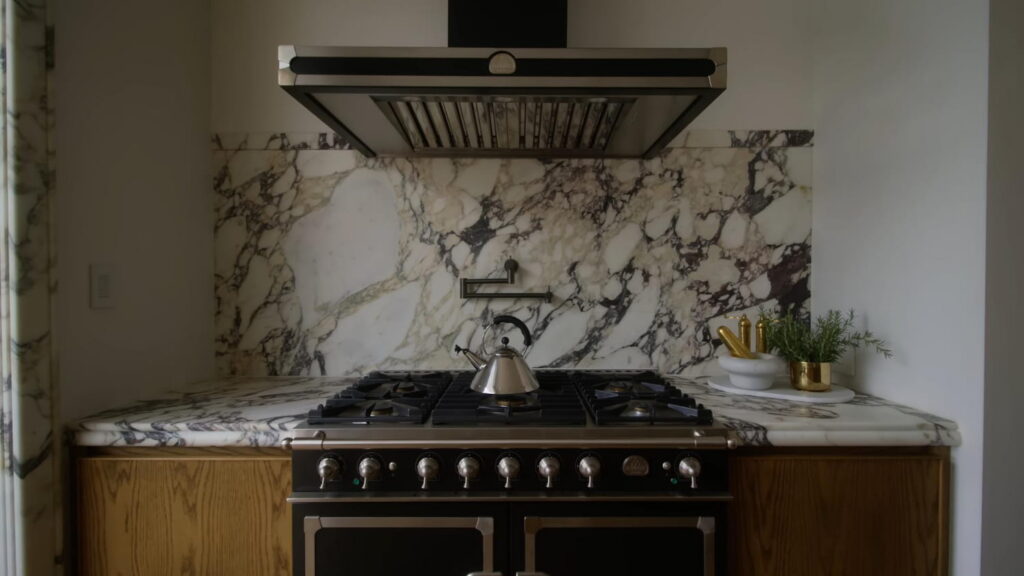
In most kitchens, the range hood is what the eye lands on first. Eighty-five percent of designers rank it as both a ventilation priority and a defining design feature, which is why most designers address it before locking in other material choices.
In 2026, the most requested hood materials are:
- Wood: warm, architectural, works well with natural cabinet finishes
- Hand-troweled plaster: sculptural soft texture, suits modern and transitional styles equally
- Large-format tile: graphic and bold, creates a strong focal point above the range
Getting the proportions right changes the entire composition. A hood that’s too narrow for the cooking surface below it looks unplanned. The hood should match the cooking surface width at a minimum, ideally extending two to six inches beyond each side.
Ceiling height affects the visual scale, too. Higher ceilings support taller, more architectural profiles. Standard heights call for something more horizontal and streamlined.
The hood material also influences surrounding finishes. A wood hood calls for warmer tones nearby. Plaster and tile work across a wider range of palettes.
7. Layered Lighting Systems
A single overhead fixture is not enough. Kitchen lighting in 2026 works in four distinct layers, each serving a different function. NKBA data shows 95% of homeowners prioritize natural lighting, and 92% specifically want dedicated task lighting. A room with only one source will feel dim and flat regardless of how well everything else was executed.
The four layers:
- Task: under-cabinet LED strips directed at the countertop prep surface.
- Ambient: cove or recessed uplighting that washes the ceiling and upper walls.
- Accent: interior cabinet lighting, highlighting glassware or open shelving.
- Decorative: statement pendants above the island, chosen for visual presence as much as light output.
Asymmetrical arrangements, multiple fixtures hung at varying heights along the island, are replacing the standard row of three matching pendants. The result feels more deliberate and less catalog-ready.
8. Panel-Ready and Smart Appliance Integration
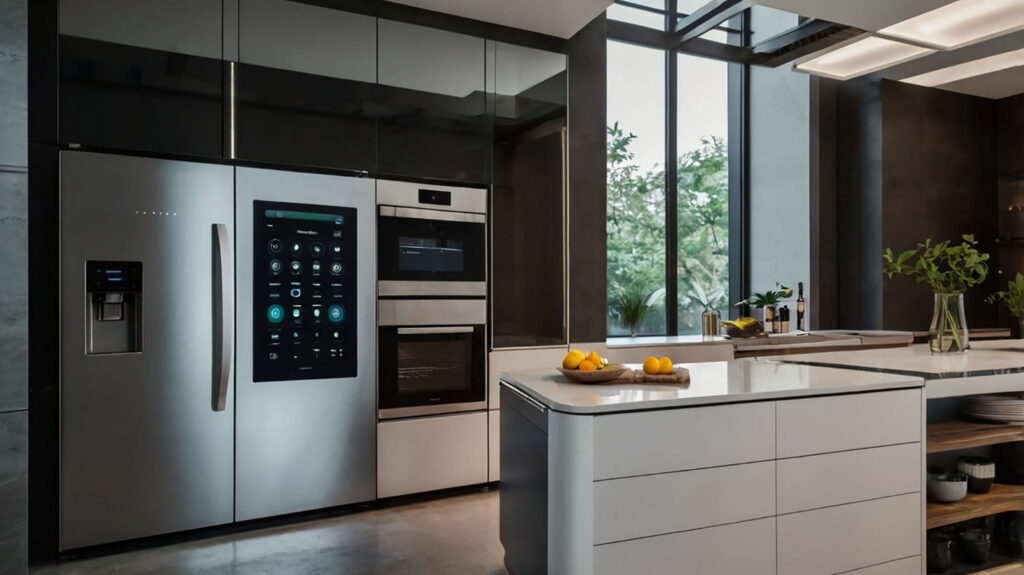
Panel-ready appliances are the single most effective move toward a kitchen that looks like furniture rather than equipment. NKBA data shows panel-ready refrigerators trending in 72% of projects and dishwashers in 85%. When the appliance face matches the surrounding cabinetry, the room stops looking like a collection of separate objects.
The direction extends beyond door panels:
- Flush induction cooktops that sit level with the countertop surface
- Touch-to-open cabinetry, removing the need for visible hardware entirely
- Touchless faucets and app-connected ovens that add function without visual clutter
- Voice-activated lighting and smart storage with embedded sensors
This produces a true luxury kitchen: one where the cooking infrastructure is present but not immediately obvious. Smart features work in the background rather than drawing attention to themselves, and the overall effect is a kitchen that looks intentional at every scale.
9. Warm Earthy Color Palettes
The all-white kitchen has given way to warmer tones. Ninety-six percent of designers still use neutrals in 2026, but the palette has shifted from cool, clinical whites to beige, mushroom, taupe, and soft off-white.
Color is returning, too, but placed with intention. Green is the leading choice, used by 86% of designers. Blue follows at 78%. Peach and terracotta are emerging as the next wave. These are rarely applied across the full room. They show up on backsplashes in 60% of projects, on islands in 57%, or on a single lower cabinet bank.
Furthermore, warmer, earthier palettes photograph well and hold their appeal longer than stark white finishes, a sound choice for homeowners thinking about long-term resale.
This marks one of the clearest kitchen remodeling trends of the past two years, and designer preferences show no sign of shifting back.
10. Workstation Sink and Prep Zone
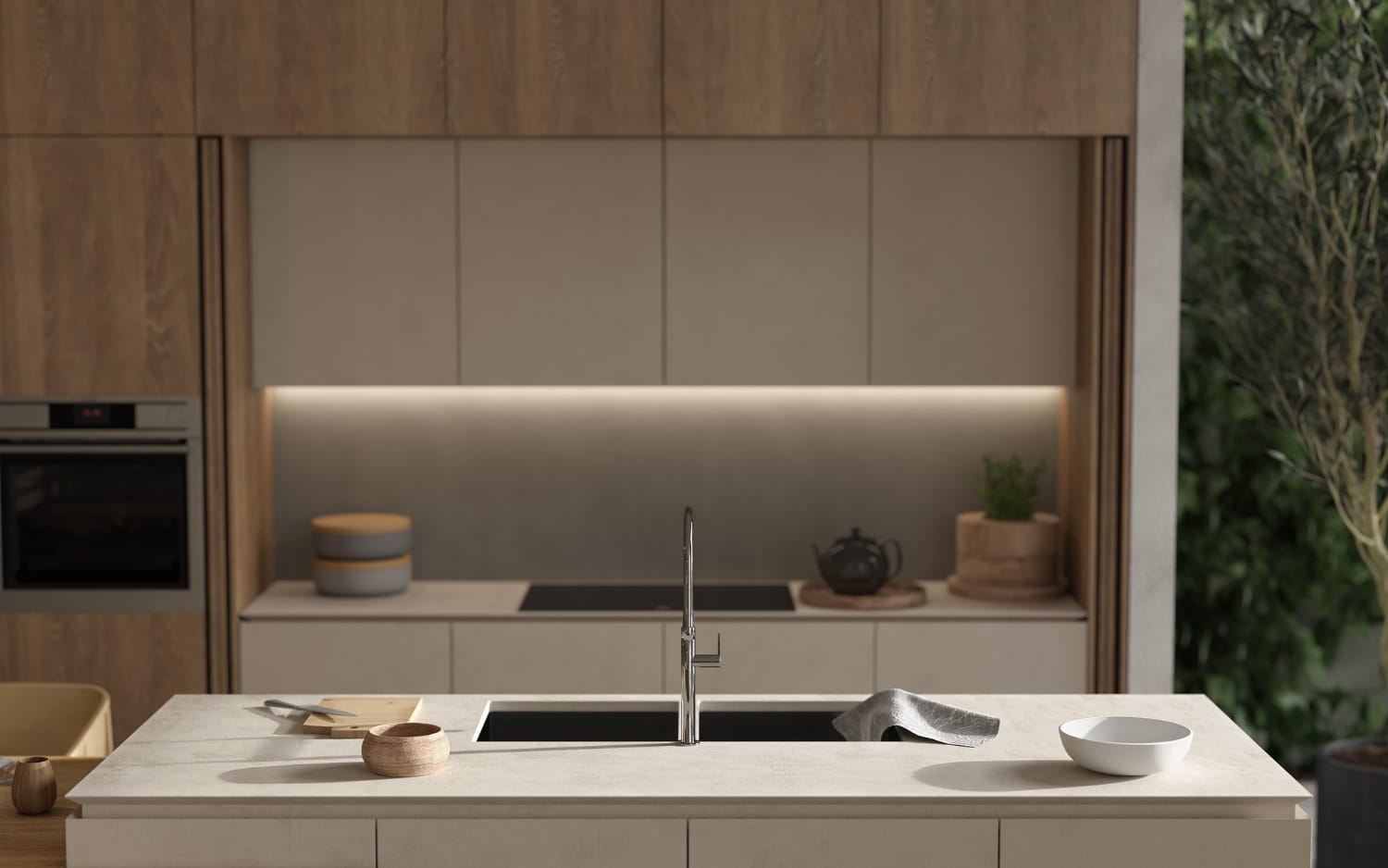
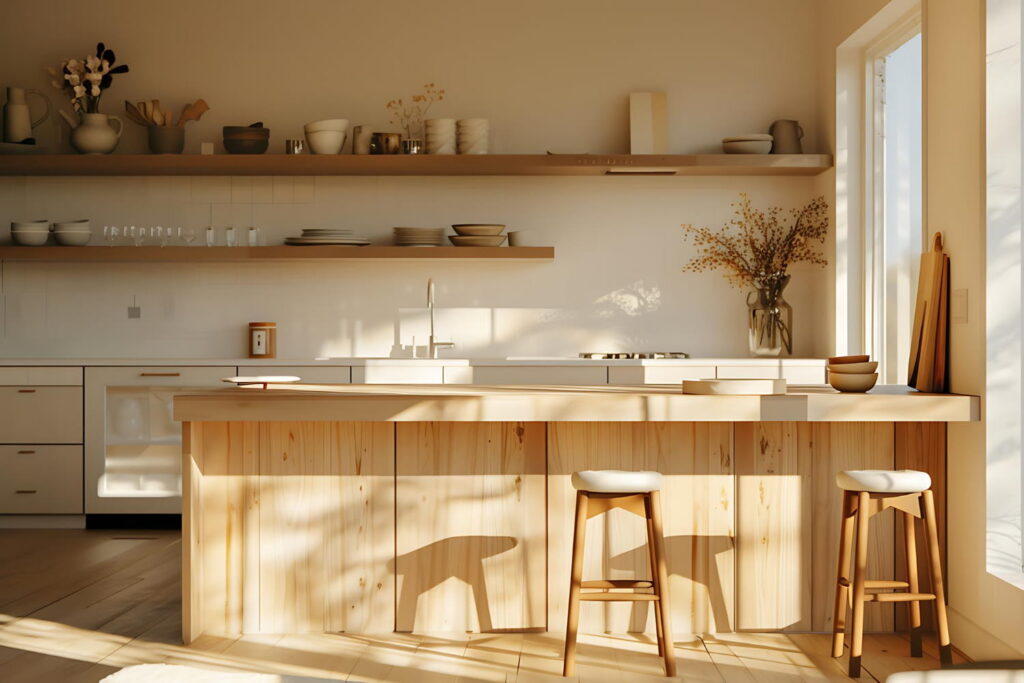
The workstation sink consolidates most active kitchen prep into one location. Wider and deeper than a standard basin, it’s built around a system of integrated accessories: sliding cutting boards, colander inserts, drying racks, and draining ledges that sit on built-in rails above the bowl.
The practical difference in daily cooking is noticeable. Most prep work happens directly over the sink, reducing the back-and-forth between counter space and basin that standard layouts create. It’s one of those changes that doesn’t photograph dramatically, but makes daily cooking noticeably smoother.
Material options worth considering:
- Stainless steel: the standard, durable and straightforward to clean
- Composite: scratch-resistant, matte finish, quieter than stainless
- Fireclay: dense, heat-tolerant, pairs well with warmer kitchen palettes
This is a kitchen remodel idea that rarely leads to a mood board, but changes daily kitchen use more than most upgrades that do.
Thinking About a Kitchen Renovation This Year?
These ten ideas cover a wide range of budgets, scope levels, and kitchen sizes. Some can be combined in a single renovation. Others work well as standalone upgrades. The common thread is that each one addresses something specific rather than just updating the surface.
If you’re planning a kitchen remodeling project in Orange County, we offer complimentary in-home consultations to help you work through scope, budget, and design before any decisions are made.
FAQ
What countertop material is leading kitchen remodeling trends in 2026?
Natural quartzite is the top choice among designers this year, favored for its heat resistance, organic veining, and durability. Engineered quartz remains a strong option at a lower price point.
What does a luxury kitchen remodel typically cost in Orange County?
Most full-scope kitchen renovations fall between $50,000 and $150,000, depending on layout changes, material selections, and appliance packages. Highly customized builds with structural work can exceed that range.
Do I need permits to remove a wall during a kitchen remodel?
Yes. Wall removal, especially for load-bearing walls, requires a structural permit from your local municipal building department. Any reputable contractor will pull this before demolition begins.
What should I prioritize if my kitchen remodel budget is limited?
Cabinetry and countertops have the largest visual impact and account for the majority of what people notice in a finished kitchen. If the layout works, updating those two elements along with lighting will get you most of the way there without a full structural renovation.
Can I stay in my home during a full kitchen renovation?
Most homeowners do, but daily access to the kitchen will be limited for weeks, depending on the scope. A well-organized contractor will isolate the work zone and maintain a clean, functional path through the rest of the house.