

The bathroom paint has peeled again, even though you repainted it recently. After the next shower, moisture may linger across the room—or the same patch beside the enclosure may turn damp. That difference is worth noticing, but neither pattern identifies the cause by itself. If dampness keeps returning, investigate it before another coat of paint or new finishes; replacing the fan alone may not address what is happening.
A shower adds moisture to the bathroom in more than one way. Warm, humid air can condense on cooler surfaces if it is not removed effectively. Water can also escape at a shower door, curtain, or enclosure edge and wet nearby finishes directly. Both can happen in the same room, which is why we would not treat peeling paint as proof of a failed fan, mold, or damage behind the wall.
Ventilation still matters. A fan that does not run, does not move air effectively, or has a ducting problem may leave humidity in the room longer than it should stay. But even a working fan cannot contain water that is leaving the shower. The location of the recurring paint failure, along with what you see after showering, helps us decide what to examine—not what to assume.

Make one short check after a shower
You do not need to open a wall or try to identify hidden damage. Note what happens after a normal shower so you can describe a pattern rather than guess at a repair:
- Notice where condensation or dampness appears, and whether it clears soon after the shower or lingers. Is it spread across the room or concentrated in one place?
- Check whether the fan runs during and after showering. If its duct route or exterior outlet is safely visible, note where it goes; do not take equipment apart to investigate.
- Look for visible water escaping the shower enclosure, especially near the door, curtain, threshold, or adjacent floor.
- Record where paint or other finishes repeatedly fail, and whether that spot becomes damp again after it has dried.
A few dated photos and notes from more than one shower can be useful, particularly if the problem is intermittent. They show when and where moisture appears, but they cannot establish the condition of materials you cannot see.
When a fan repair may be enough
If the main symptom is room-wide condensation, the fan is not operating properly, and there is no visible sign of water escaping the shower or recurring localized dampness, a limited ventilation repair may be a reasonable first step after the fan and its vent path have been assessed. You can then watch whether the bathroom dries more readily and whether the finish problem returns. There is no need to commit to a full remodel solely because paint peeled.
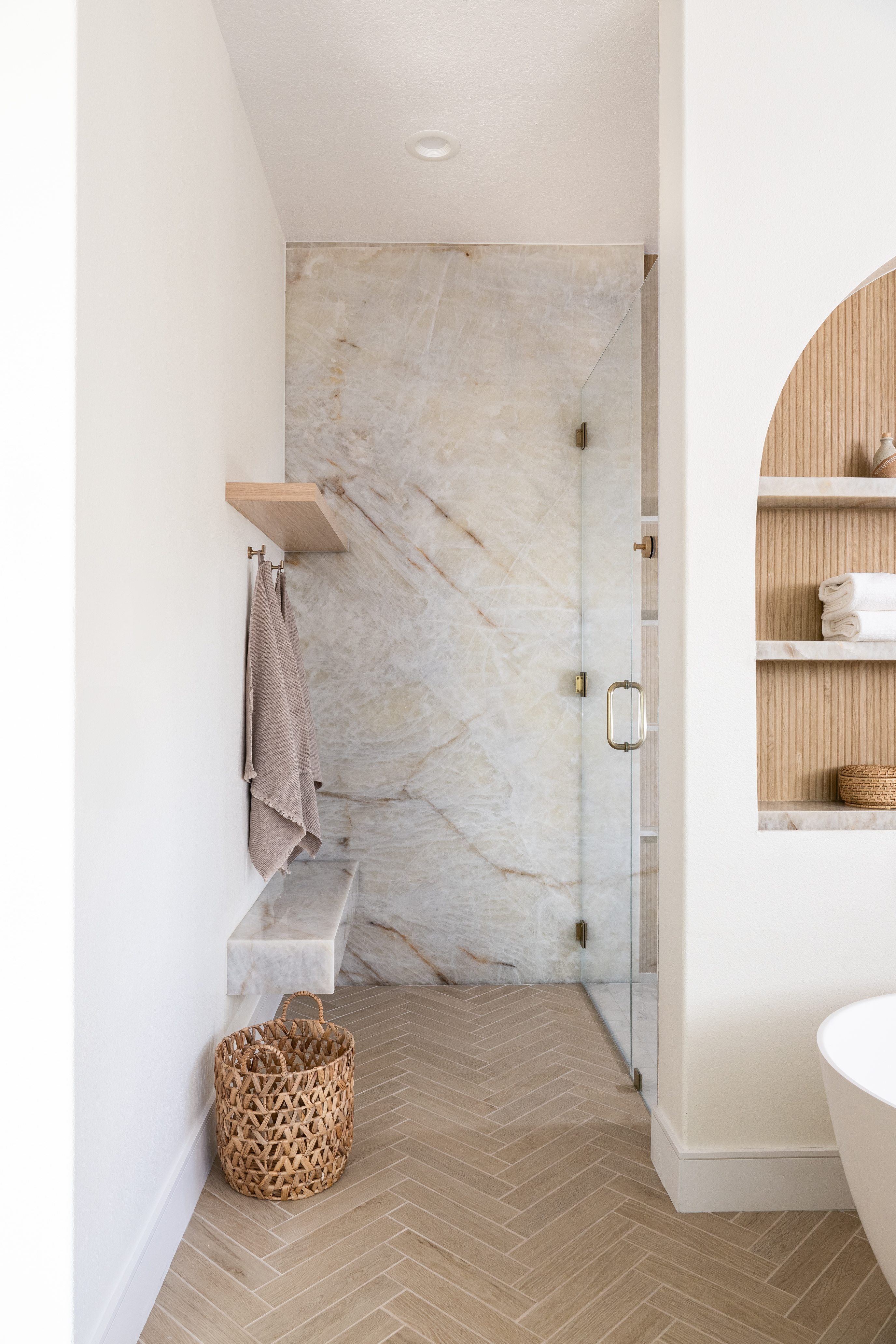
If dampness repeatedly appears beside the shower, a nearby finish keeps failing, or the room stays wet despite a functioning fan, the question is broader. We would want to consider ventilation, how the shower contains water, and the condition of affected surfaces together. Repainting or replacing the fan without that assessment could leave the source of moisture untouched.
Let the findings shape the remodel—not the finishes
For an Orange County homeowner already planning a bathroom remodel, the moisture question belongs in the scope before tile, paint, and fixtures are finalized. If the issue is confined to ventilation, the plan may call for a targeted correction alongside the intended updates. If shower water is reaching adjacent surfaces, the shower enclosure and affected materials may need closer attention as part of the work.
Some conditions cannot be confirmed until an area is opened during construction. What we find then may change the repair work or the remodel scope, so we discuss that uncertainty rather than promise that a surface-level observation tells the whole story. Addressing the suspected moisture paths before installing new finishes gives each design choice a clearer foundation.
Bring the pattern to a connected planning conversation
When you speak with us at OC Builders Group, bring the post-shower notes, photos, and any history of repairs or repainting. Our Orange County design-build team can use those details to guide an on-site assessment and connect what is found to the bathroom plan—from ventilation and shower details to affected materials and construction. If the work calls for changes that may require permits or inspections, we can address those requirements according to the project scope and the rules of your city, rather than assuming one Orange County rule fits every home.
Whether you are considering bathroom remodeling near me because the paint keeps failing or because a renovation is already on your calendar, start with the moisture pattern. We can help you determine what needs a closer look before you invest in the finished room.