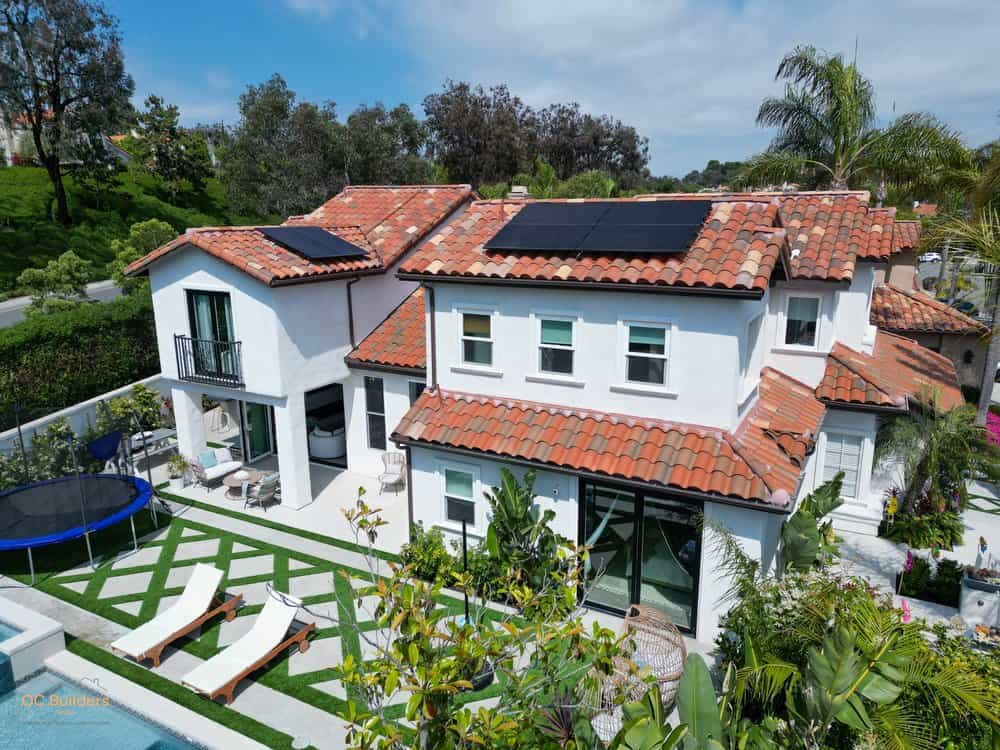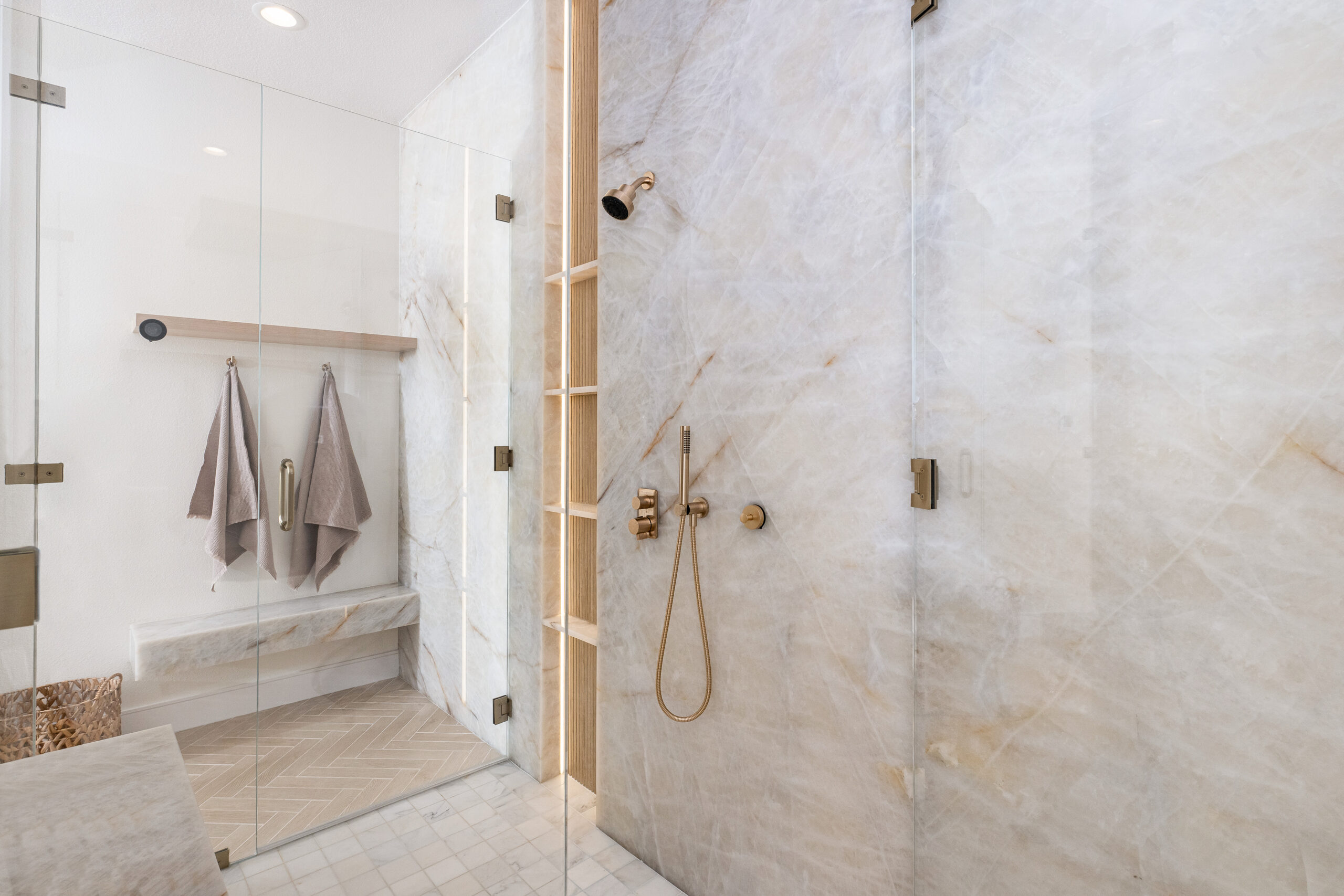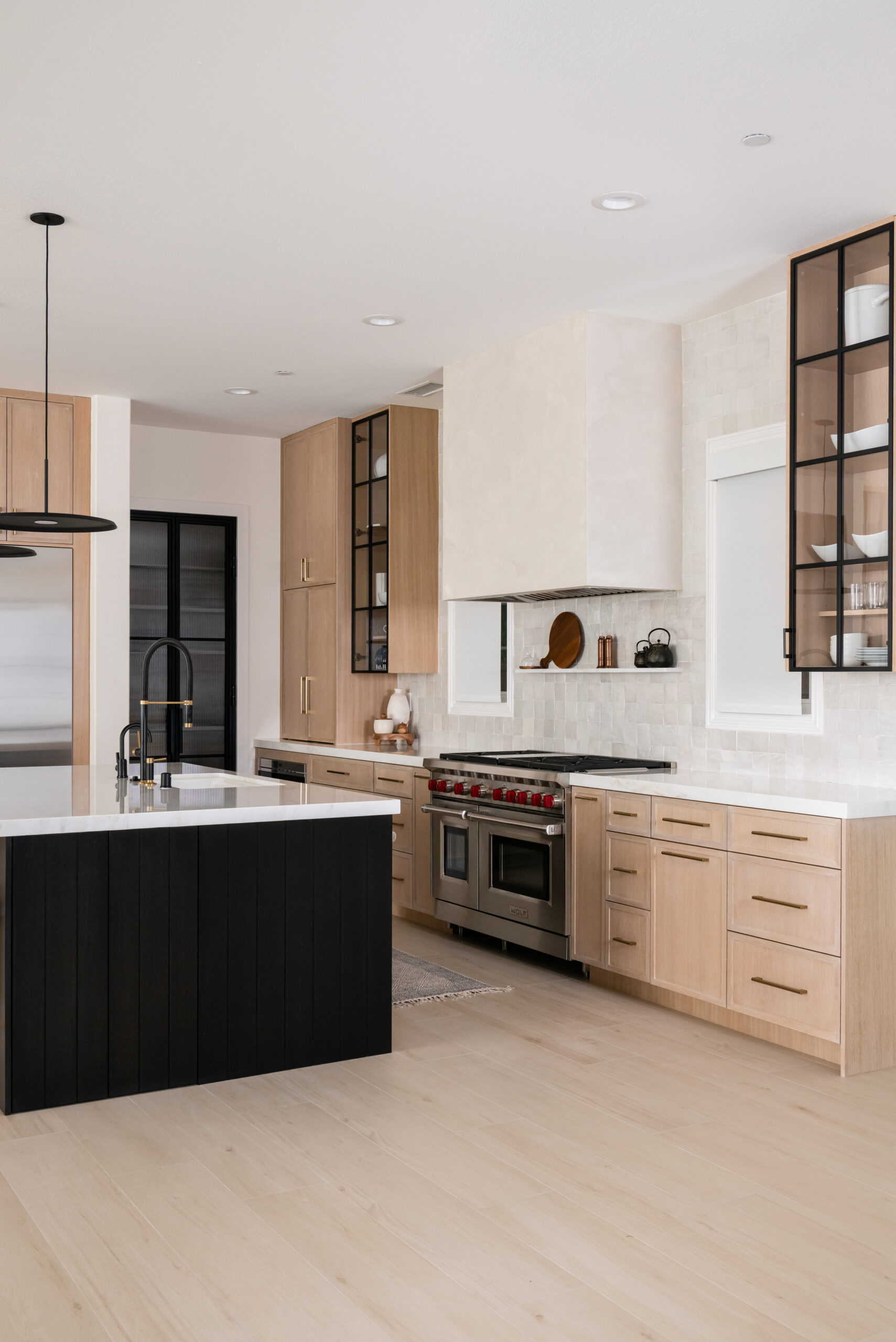

California is one of the country’s toughest markets for verified home performance. Programs like DOE Zero Energy Ready Home make one thing clear: real efficiency is measured, documented, and tested. For Orange County homeowners, the question is not who uses the word “green.” The question is who can show proof through HERS testing, ENERGY STAR, LEED, GreenPoint Rated, Indoor airPLUS, heat pumps, airtight construction, and solar-ready or battery-ready planning.
An energy-efficient builder in Orange County does more than meet code. Every legitimate residential builder must follow California Title 24, Part 6 and related CALGreen requirements. That is the legal baseline, not the full proof of a high-performance home.
Title 24 affects plan review, energy forms, equipment selection, lighting, ventilation, and inspections. A stronger builder goes further by setting performance targets early, coordinating systems during design, and verifying results in the field.
The best energy-efficient builders in Orange County usually address insulation, windows, air sealing, duct design, ventilation, and HVAC sizing as one connected system. That matters because Orange County has more than one climate story. Coastal neighborhoods deal with cooler air and moisture, while inland areas face hotter afternoons and bigger temperature swings.
Recent code cycles have pushed projects toward heat pump HVAC, heat pump water heaters, tighter ducts, better ventilation, electrification planning, and solar coordination. Most new low-rise homes also include solar under the prescriptive path unless an exception or performance tradeoff applies. That means the builder must coordinate architecture, mechanical systems, electrical planning, and permitting without letting details slip.
For remodels, additions, ADUs, and rebuilds, replacing systems or altering assemblies can trigger current efficiency requirements. Many California projects also involve HERS raters to verify blower door results, duct leakage, refrigerant charge, airflow, and ventilation performance. Homeowners should ask not just whether a HERS rater is involved, but exactly what will be tested.
- Can the builder explain CF1R, CF2R, and CF3R forms in plain English?
- Do they provide sample energy reports, insulation schedules, and window schedules?
- Do they discuss airtightness goals, blower door testing, and duct leakage testing?
- Do they size HVAC using calculations rather than guesswork?
- Can they show completed projects with documented high-performance assemblies?
Which certifications and standards matter most for efficient homes in California?
The most valuable standards are the ones that verify real performance. Some confirm design intent. Some confirm field installation. The strongest programs do both.
For Orange County homeowners, the right standard depends on whether the project is a new custom home, ADU, addition, major remodel, or whole-home renovation.
| Standard | What it verifies | Mandatory? | Why it matters in Orange County |
|---|---|---|---|
| California Title 24 | Baseline energy code, forms, equipment, lighting, envelope, solar pathway | Yes | Required for plan check and inspections; the starting point for every legitimate project |
| HERS verification | Independent testing of ducts, airflow, refrigerant charge, blower door, ventilation | Required for some measures | Confirms installed performance, not just what was drawn on plans |
| ENERGY STAR Residential New Construction | Whole-home efficiency package above many standard code baselines | No | A widely recognized trust signal for new homes |
| DOE Zero Energy Ready Home | Advanced efficiency, comfort, durability, and indoor air quality above code | No | One of the strongest signals because it layers multiple performance requirements |
| LEED for Homes | Broader sustainability, energy, water, materials, site, and indoor environmental quality | No | Often relevant for custom homes with wider sustainability goals |
| GreenPoint Rated | California-focused green home rating for energy and environmental performance | No | A strong regional benchmark for California homeowners |
| EPA Indoor airPLUS | Indoor air quality, moisture management, ventilation, and low-emission strategies | No | Especially important in coastal areas where humidity and ventilation details are critical |
As a general pattern, large production builders often highlight ENERGY STAR, solar packages, or efficient product upgrades. Energy-efficient custom home builders in Orange County may be more likely to pursue LEED, DOE Zero Energy Ready Home, or other above-code frameworks. The key is simple: certifications matter when they fit the project and come with real documentation.
What features should an energy-efficient Orange County home include?
The highest-performing homes usually start with the envelope. That means an airtight shell, continuous insulation, well-chosen windows, smart shading, and HVAC sized to the house instead of to habit.
In Orange County, those choices are not cosmetic. Inland heat, coastal solar gain, and marine-layer moisture can all change comfort, durability, and operating cost.
Typical efficient homes may include attic insulation around R-30 to R-38 and wall insulation around R-13 to R-21, depending on wall type and framing. Dual-pane low-E vinyl or fiberglass windows are common, while more advanced homes may use spectrally selective glazing with better U-factor and SHGC performance. These details matter even more in homes with large glass openings, sliding doors, and indoor-outdoor layouts.
DOE Building America Solution Center guidance is useful for air sealing and durable assemblies. Better homes also tend to include sealed ductwork, tighter construction, and mechanical systems chosen through actual calculations.
Heat pump HVAC is increasingly common, especially in all-electric projects. Where gas systems remain, builders may use high-efficiency furnaces with high-SEER air conditioners. Current cooling equipment often starts around SEER2 14.3 or higher, while premium systems may be two-stage or variable-speed. Heat pump water heaters are also becoming far more common. Solar PV is effectively standard for most new low-rise homes under Title 24, while battery storage is often added for resilience and peak-rate management.
- High-performance insulation with continuity at transitions
- Air sealing with a stated airtightness target
- Low-E windows selected for orientation and solar gain
- Cool or solar-ready roofing, with radiant-barrier strategies where appropriate
- Heat pump HVAC and efficient water heating
- Balanced ventilation and humidity-aware design
- LED lighting, smart controls, and efficient appliances
- Induction-cooking readiness or broader all-electric planning
- Solar-ready and, where appropriate, battery-ready planning
The right package depends on the site, orientation, budget, and project type. A coastal remodel may need a different strategy than an inland custom home. The best builders match the system to the real conditions of the property.
How do you verify an energy-efficient builder in Orange County?
Ask for documents, not adjectives. A qualified builder should be able to show sample energy reports, HERS documentation, HVAC load calculations, insulation and window schedules, certification records, testing protocols, and examples of past projects with measurable performance details.
Homeowners should also ask how the team coordinates design, engineering, permitting, and field execution. Many failures happen when good plans are not carried through during construction.
Red flags include vague utility-savings promises, no testing plan, no discussion of air sealing or ventilation, and no ability to explain Title 24 compliant builder requirements clearly. Common problems also come from inconsistent CF1R, CF2R, or CF3R forms, mismatches between plans and mechanical schedules, or HVAC equipment sized by rule of thumb instead of calculation.
Why design-build can help
Design-build can protect energy intent from concept to construction. When one team manages planning, design, permitting, and construction, there is often less fragmentation between what is drawn and what gets built. That can reduce redesigns, permit revisions, and product conflicts, especially for remodels, ADUs, and homes with complex glazing, electrification, or luxury finish selections.
Why Orange County permitting and Title 24 experience matter
Local code knowledge can save time, money, and redesigns. Title 24 is not just a design issue. It affects plan review, compliance forms, inspections, and product selection.
Integrating those decisions early can help avoid revisions caused by window changes, HVAC substitutions, electrical-panel limitations, roof-layout conflicts, or late-stage electrification decisions. In practice, that coordination can be the difference between a smooth permit process and weeks of preventable delay.
Orange County projects vary widely. Coastal homes may need more attention to ventilation and moisture management. Inland homes often need stronger solar control and better cooling performance. HOA rules, lot constraints, aging-home conditions, utility-service issues, and different requirements for ADUs, additions, and new construction can all shape the energy strategy.
A builder with local permitting experience can often anticipate plan-check concerns, coordinate compliance documents more smoothly, and reduce conflicts between finish selections and efficiency goals. That becomes even more important when a project includes service upgrades, solar integration, or phased remodeling in an occupied home.
Questions to ask before hiring an energy-efficient builder
- What standards beyond Title 24 do you build to, if any?
- Will an independent HERS rater test the project, and what exactly will be verified?
- How do you size HVAC and ventilation systems?
- What airtightness or duct-leakage targets do you use?
- Can you show sample energy reports, specifications, or past project documentation?
- How do you coordinate windows, shading, insulation, and large glass openings?
- What is included for solar-ready, battery-ready, EV charging, or all-electric planning?
- For remodels and ADUs, what existing systems or assemblies may trigger upgrades?
- How do you supervise subcontractors on air sealing, insulation, and mechanical quality?
- What assumptions, allowances, testing deliverables, and exclusions appear in the written scope?
Compare written scopes, assumptions, and deliverables, not just price. Comfort, durability, indoor air quality, aesthetics, and operating cost all matter. A low bid can become an expensive mistake if the performance details are weak.
Bottom line
- Title 24 is the minimum standard; it does not automatically mean a home is high-performance.
- A true energy-efficient builder in Orange County should show testing, documentation, and a clear systems-based strategy.
- HERS verification, HVAC calculations, airtightness planning, and envelope details are stronger proof than marketing language.
- Local permitting and climate knowledge matter because coastal and inland Orange County homes perform differently.
How OC Builders Group approaches energy-efficient design-build projects
For homeowners who want one coordinated team, OC Builders Group design-build services reflect the kind of integrated workflow that efficient projects often require. That includes planning, in-house design support, permitting coordination, vetted local trade partners, and communication from concept through construction.
This approach can be especially useful for new homes, complete renovations, room additions, ADUs, garage conversions, and kitchen or bathroom remodels where envelope upgrades, system replacements, or electrification decisions are part of the scope. When blueprints, materials, permit submissions, and construction sequencing are managed together, it is often easier to protect energy goals from the first sketch to the final inspection.
For homeowners comparing energy-efficient builders in Orange County, that kind of single-team coordination is one factor worth evaluating. Homeowners who want project-specific guidance can schedule a consultation with OC Builders Group to review options for their property.
FAQ
Who builds energy-efficient homes in Orange County?
Usually custom home builders and design-build firms that can document Title 24 compliance, HERS verification where applicable, and above-code strategies such as ENERGY STAR, DOE Zero Energy Ready Home, LEED, GreenPoint Rated, or Indoor airPLUS.
How do you verify an energy-efficient builder in Orange County?
Ask for energy reports, HERS testing plans, HVAC load calculations, certification records, insulation and window schedules, and examples of completed projects with documented results.
What certifications matter most for efficient homes in California?
Title 24 is mandatory, HERS is important for verification, and voluntary programs such as ENERGY STAR, DOE Zero Energy Ready Home, LEED, GreenPoint Rated, and Indoor airPLUS provide stronger evidence of performance.
Do Orange County builders offer net-zero or zero energy ready homes?
Some do, especially in custom or boutique residential work. Availability depends on builder experience, budget, project type, and site constraints.
Is Title 24 enough to call a home energy-efficient?
No. Title 24 is the required baseline. A stronger efficiency claim usually includes testing, documentation, and a design strategy tailored to the home, climate, and systems involved.
Conclusion
The best energy-efficient builders in Orange County show more than polished marketing. They show code fluency, testing, documentation, and a clear high-performance strategy matched to the site and project type. For homeowners, proof matters. Verification matters. Coordination matters. And for those looking at design-build options, OC Builders Group is one local firm worth considering for an informed consultation.