
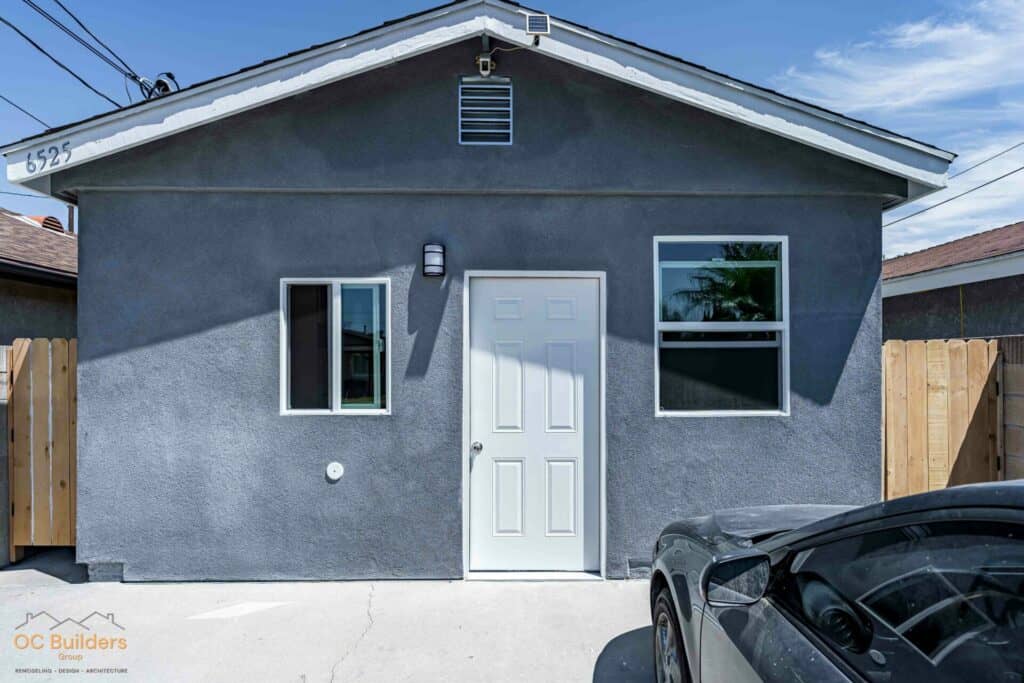
Detached Accessory Dwelling Units (ADUs) represent one of the most strategic investments Orange County homeowners can make today. These freestanding secondary residences on single-family lots offer rental income, multigenerational living solutions, and substantial property value increases. With California law enabling nearly all single-family homeowners to add ADUs and Orange County’s housing market driving demand, selecting the right builder becomes critical. This guide examines the region’s leading detached ADU specialists, compares their approaches and costs, and equips you with the criteria to choose a turnkey partner who delivers quality, transparency, and minimal disruption.
Introduction to Detached ADUs in Orange County
A detached ADU is a freestanding secondary residential structure built on the same lot as a primary single-family home. Unlike attached units or garage conversions, detached ADUs stand apart from the main house, offering maximum privacy and flexible use cases—from guest accommodations and home offices to long-term rental properties and aging-parent suites.

Orange County’s ADU surge addresses urgent housing needs while offering homeowners rental income and multi-generational living options. State legislation has streamlined approval processes, and California law now allows nearly all single-family homes in Orange County to build or convert garages into ADUs. Local municipalities have adopted these regulations, setting clear guidelines for setbacks, size limits, and design compatibility that make detached ADU projects more predictable than ever.
Understanding these legal requirements is essential before breaking ground. Orange County enforces specific zoning rules—such as maximum living area caps and setback distances—that shape what you can build and where. Working with builders who navigate these regulations daily ensures your project moves forward without costly delays or redesigns.
Why Choose a Detached ADU for Your Property
Detached ADUs deliver distinct advantages that attached units and conversions cannot match. Privacy stands foremost: a separate structure means guests, tenants, or family members enjoy their own entrance, outdoor space, and autonomy, while you maintain the sanctity of your primary residence.
Financial benefits are equally compelling. Homeowners can transform underutilized spaces into valuable assets, thereby enhancing property value and providing additional income streams. Rental income from a well-designed ADU in desirable Orange County neighborhoods often covers mortgage payments or funds retirement. Property appraisals consistently reflect the added square footage and rental potential, translating to tens of thousands in equity gains.
Common use cases include:
- A guest house for visiting family or friends
- A private home office or creative studio
- A long-term rental unit generating monthly income
- A multigenerational living space for aging parents or adult children
- A short-term vacation rental in tourist-friendly areas
The detached ADU investment also future-proofs your property. As housing costs rise and demographic shifts favor flexible living arrangements, a turnkey ADU positions your home as adaptable and market-ready.
Overview of the Orange County Detached ADU Market
The rise in ADU construction in Orange County is driven by affordable housing needs, rental demand, and multi-generational living options. This convergence has attracted a diverse ecosystem of builders—from full-service design-build firms offering bespoke architecture to prefab specialists delivering compact studios in under six months.
Market players fall into several categories. Turnkey ADU services providers manage every phase from initial consultation through final inspection, handling permits, design, construction, and sometimes financing. Prefab ADU companies manufacture code-compliant modules off-site, then assemble them on your lot for faster timelines and predictable costs. Traditional general contractors with ADU experience offer customization and local expertise but may require you to coordinate architects and engineers separately.
Orange County ADU trends show homeowners prioritizing speed, transparency, and minimal disruption. Size regulations influence design: an ADU’s maximum living area cannot exceed 50% of the primary dwelling’s size or 1,000 square feet, per Orange County guidelines. This cap encourages efficient layouts and creative space planning, making experienced ADU contractors invaluable for maximizing livability within code limits.
Key Factors to Consider When Selecting an ADU Builder
Choosing the best detached ADU builder requires evaluating multiple dimensions beyond price. Start with licensing and insurance—California requires contractors to hold an active license and carry liability and workers’ compensation coverage. Verify credentials through the Contractors State License Board and request certificates of insurance before signing any agreement.
ADU-specific experience matters profoundly. Builders who specialize in accessory dwelling units understand local permitting nuances, design for code compliance from the outset, and anticipate site challenges that general remodelers might miss. Review their ADU builder portfolio, asking for photos, floor plans, and references from recent Orange County projects.
Communication style and project management approach separate excellent builders from adequate ones. A licensed ADU contractor in Orange County should offer a single point of contact, provide transparent timelines, and update you regularly without prompting. Assess responsiveness during initial consultations—if they’re slow to reply before you’ve hired them, expect worse during construction.
Use this ADU Builder Checklist when evaluating candidates:
- Active California contractor’s license and insurance
- Demonstrated ADU project experience in Orange County
- Local permitting expertise and established city relationships
- Turnkey design and construction services under one contract
- Transparent pricing with detailed line-item estimates
- Customizable design options and 3D visualization tools
- Clear warranty and post-construction support terms
- Positive reviews and verifiable client references
How to Evaluate Detached ADU Builders in Orange County
Narrowing your shortlist to trusted builders follows a systematic process. Begin by researching Orange County ADU trends and compiling a list of firms with strong online presence, client testimonials, and completed projects in your area. Shortlist three to five candidates, then request initial consultations—most reputable builders offer these free or at minimal cost.
During consultations, evaluate how well the builder listens and whether they ask probing questions about your goals, budget, and property constraints. A turnkey ADU builder is an all-in-one provider managing design, permits, construction, and sometimes financing from start to finish. This integrated approach reduces coordination headaches and accountability gaps, but only if the firm demonstrates competence across all phases.
Request detailed quotes that break down design fees, permitting costs, materials, labor, and contingency allowances. Compare these against your budget and the market ranges you’ve researched. Beware of quotes significantly lower than competitors—they often signal corners cut on materials, unlicensed subcontractors, or incomplete scopes that balloon with change orders.
OC Builders Group’s ADU design tool offers 3D modeling and virtual walkthroughs to help visualize your ADU before building. Ask prospective builders if they provide similar visualization services. Seeing your unit rendered in three dimensions clarifies layout decisions and prevents costly mid-construction changes. Review contract terms carefully, ensuring they specify timelines, payment schedules tied to milestones, and dispute resolution procedures.
Top Detached ADU Builders in Orange County
Orange County’s best detached ADU builders each bring distinct strengths to the table. Here’s a snapshot of leading firms and what sets them apart:
| Builder | Specialty | Typical Size | Price Range | Timeline | Key Differentiator |
|---|---|---|---|---|---|
| OC Builders Group | Turnkey design-build, luxury finishes | Custom | Custom | 6–10 months | Bespoke architecture, single point of contact |
| SnapADU | Compact backyard studios | 200–600 sq ft | $120K–$280K | 3–6 months | Fast permitting, modern prefab |
| ADUscale | Full-service turnkey | 300–1,200 sq ft | $60K–$400K | 4–8 months | Free consultations, financing, ROI tools |
| Villa Homes | Affordable prefab | 250–1,000 sq ft | $100K–$300K | 3–6 months | Customizable interiors, integrated financing |
| GreatBuildz | Contractor matching | Varies | Varies | Varies | Pre-screened network, project oversight |
| L Square Construction | Transparent pricing, tech-forward | Custom | Custom | Custom | Free 3D visualizations, one-year guarantee |
Each reputable ADU contractor serves different client priorities. Homeowners valuing speed and predictability gravitate toward prefab specialists like SnapADU and Villa Homes. Those seeking fully customized designs and premium finishes partner with design-build firms such as OC Builders Group. First-time builders or out-of-town owners often benefit from GreatBuildz’s guided contractor matching and project support.
OC Builders Group: Premier Turnkey ADU Design and Build Services
OC Builders Group delivers turnkey ADU design-build services tailored to discerning Orange County homeowners who demand seamless project delivery and exceptional craftsmanship. The firm’s integrated approach eliminates the coordination burden: from initial concept through final walkthrough, a dedicated project manager serves as your single point of contact, orchestrating architects, engineers, permitting specialists, and trade partners.
This streamlined methodology ensures rapid, transparent quoting and minimizes client disruption. OC Builders Group’s design team creates bespoke architectural plans that complement your primary residence while maximizing the ADU’s functionality and aesthetic appeal. Their curated network of licensed tradespeople—many with decades of local experience—executes construction with meticulous attention to detail and adherence to timelines.
Unique advantages include:
- Rapid initial consultations with same-week conceptual designs
- Transparent fixed-price contracts with detailed line-item breakdowns
- Dedicated project managers providing weekly updates and on-demand access
- Premium material selections and custom finishes unavailable from prefab providers
- Post-completion support and warranty coverage for peace of mind
OC Builders Group’s integrated ADU project delivery in Orange County suits homeowners who view their detached ADU as a long-term investment in property value and quality of life, not merely a commodity build. Expect higher upfront costs offset by superior craftsmanship, faster problem resolution, and designs that age gracefully.
SnapADU: Modern Compact Backyard Studios with Fast Timelines
SnapADU builds 200–600 square foot detached studios with quick 3–6 month delivery and strong permitting capabilities in Los Angeles and Orange County. Their prefab approach—manufacturing wall panels, roof trusses, and utility systems in a controlled factory environment—accelerates construction while maintaining code compliance and quality control.
Homeowners prioritizing speed and compact footprints find SnapADU’s model appealing. Projects typically unfold in these stages:
- Consultation and site evaluation (1–2 weeks): Verify feasibility, finalize floor plan
- Permitting and engineering (4–8 weeks): SnapADU handles all submissions and city coordination
- Manufacturing (6–8 weeks): Concurrent with permitting, panels built off-site
- Site preparation (1–2 weeks): Foundation, utilities, access
- Assembly and finishing (3–4 weeks): Install panels, complete interiors, final inspections
ADUscale: Comprehensive Turnkey Solutions with Accessibility Focus
ADUscale offers turnkey ADU services including free consultations, permitting, financing, and construction in Southern California. Their comprehensive scope extends beyond new detached builds to encompass garage conversions ($60,000–$150,000) and energy-efficient upgrades, making them versatile partners for diverse property types and budgets.
The firm’s energy-efficient builds often incorporate solar-ready electrical panels, high-performance insulation, and low-flow plumbing fixtures, reducing long-term operating costs and appealing to environmentally conscious owners. ADUscale’s broad service range and transparent communication make them a strong choice for homeowners seeking a single partner to guide them from concept to tenant move-in.
Villa Homes: Affordable Prefab ADUs with Flexible Design Options
Villa Homes provides prefab ADUs from 250 to 1,000 square feet with integrated financing and customizable interiors for families seeking value without sacrificing personalization. Their factory-built modules arrive at your site ready for rapid assembly, typically completing projects in 3–6 months.
Villa Homes suits cost-conscious families, first-time landlords, and homeowners in appreciation-focused markets where speed to rental income matters. Their prefab model sacrifices some architectural uniqueness but delivers predictable timelines and transparent pricing that reduce financial risk.
GreatBuildz: Reliable Contractor Connections and Project Support
GreatBuildz connects Orange County homeowners with reliable, pre-screened general contractors for ADU projects. Unlike traditional builders, GreatBuildz operates as a matchmaking and oversight platform, vetting contractors for licensing, insurance, references, and ADU experience before introducing them to clients.
This model benefits homeowners who want control over contractor selection but lack the time or expertise to research and vet candidates independently. GreatBuildz’s process unfolds in clear steps:
- Initial consultation: Discuss your ADU vision, budget, and property details
- Contractor matching: GreatBuildz presents two to three pre-screened builders suited to your project
- Bid coordination: Contractors visit your site and submit detailed proposals
- Contract negotiation: GreatBuildz reviews bids with you, clarifying scope and pricing
- Project oversight: Throughout construction, GreatBuildz monitors progress and mediates any issues
GreatBuildz doesn’t markup contractor bids—they charge homeowners a separate project management fee. This transparency aligns incentives: GreatBuildz succeeds when you’re satisfied with your chosen contractor’s performance, not when costs escalate.
L Square Construction: Transparent Pricing and 3D Visualizations
L Square Construction, based in Irvine, has built over 200 ADUs and offers free 3D visualizations along with a one-year builder guarantee. Their tech-forward approach demystifies the construction process, using rendering software to show exactly how your detached ADU will look before framing begins.
L Square’s one-year builder guarantee covers workmanship defects, giving clients recourse if issues emerge after final inspection. Combined with their extensive Orange County ADU portfolio, this warranty signals confidence in their trade partners and construction quality. Homeowners who value visual planning, cost predictability, and post-construction accountability find L Square’s model reassuring.
Comparing Costs and Timelines Among Detached ADU Builders
Understanding cost and timeline ranges helps you set realistic expectations and identify outliers during the bidding process. Here’s a detailed comparison of leading Orange County builders:
| Builder | Typical Size | Cost Range | Timeline | Cost per Sq Ft | Unique Strength |
|---|---|---|---|---|---|
| OC Builders Group | Custom | $100K–$350K | 3–6 months | $250–$600+ | Fast permits, compact modern designs,Bespoke design, premium finishes, dedicated PM |
| ADUscale | 300–1,200 sq ft | $60K–$400K | 4–8 months | $200–$333+ | Turnkey service |
| Villa Homes | 250–1,000 sq ft | $100K–$300K | 3–6 months | $300–$400+ | Prefab efficiency |
| L Square | Custom | Custom | Custom | $350–$500+ | 3D visualizations |
| SnapADU | Custom | Custom | 8–10 months | $350–$500+ | premium finishes |
Several factors influence where your project falls within these ranges. Design complexity drives costs: simple rectangular footprints with standard finishes cost less than multi-level units with custom millwork and high-end appliances. Materials matter significantly—luxury vinyl plank flooring runs $3–$6 per square foot installed, while engineered hardwood costs $8–$14.
Permitting timelines vary by city. Irvine and Newport Beach often process ADU permits in 6–10 weeks, while smaller municipalities may take 12–16 weeks. Site preparation expenses fluctuate based on grading needs, utility distances, and access constraints. A flat lot with utilities near the proposed ADU location costs $10,000–$20,000 to prepare; sloped properties requiring retaining walls and utility trenching can reach $40,000–$60,000.
Turnkey builders bundle these costs into fixed-price contracts, while traditional contractors may present them as allowances or separate line items. Clarify what’s included in quoted prices to make accurate comparisons.
What to Expect from the ADU Permitting and Approval Process
Orange County’s ADU permitting process follows a predictable sequence, though timelines depend on your city’s workload and your builder’s experience with local officials. Expect these main steps:
- Pre-application consultation: Meet with city planners to review site constraints, setbacks, and zoning compliance
- Plan preparation: Architect or designer creates blueprints, structural calculations, and energy compliance documentation
- Permit application submission: Submit plans, fees, and required forms to the city building department
- Plan review: City reviewers check for code compliance, often requesting revisions or clarifications
- Permit issuance: Once approved, obtain building permit and schedule inspections
- Construction inspections: City inspectors verify foundation, framing, electrical, plumbing, and final completion
- Certificate of occupancy: Final approval allowing legal occupancy
Key regulations shape your design. One-story detached ADUs must have at least a 5-foot rear setback; two-story detached ADUs require 15-foot rear setbacks in Orange County. Setbacks define the minimum distance from your ADU’s walls to the property line, ensuring adequate space for fire access, privacy, and utility maintenance.
ADUs must use exterior finish materials and architectural details compatible with the primary residence. This compatibility requirement prevents jarring aesthetic contrasts that could affect neighborhood character or property values. Builders experienced with local design review boards understand how to satisfy this standard while still creating distinct, functional ADU designs.
Plan utility connections early for water, electricity, and sewer to avoid delays during ADU construction. City inspectors verify these connections meet code before allowing framing to proceed. Experienced builders coordinate with utility companies weeks in advance, scheduling trenching and meter installations to align with construction milestones.
How Builders Manage Design, Construction, and Project Coordination
Understanding the design-build workflow demystifies what happens between signing a contract and receiving your keys. A typical detached ADU project unfolds through these phases:
Initial consultation and site evaluation (1–2 weeks): The builder visits your property, discusses your vision and budget, assesses site constraints, and verifies zoning compliance. Expect conversations about intended use, desired square footage, and must-have features.
Design and blueprints (3–6 weeks): Architects create floor plans, elevations, and 3D renderings. You’ll review and refine these designs, selecting finishes and fixtures. The builder prepares structural calculations, energy compliance reports, and other permit documentation.
Permitting (6–16 weeks): The builder submits plans to your city, responds to reviewer comments, and obtains the building permit. This phase runs concurrently with final design refinements and material procurement for efficient builders.
Site preparation (1–3 weeks): Crews clear vegetation, grade the lot, excavate for foundations, and trench utility lines. Inspectors verify foundation forms before concrete pours.
Construction (8–16 weeks): Framing, roofing, windows, and exterior finishes come first, weatherproofing the structure. Rough-in of electrical, plumbing, and HVAC follows, with inspections at each stage. Insulation, drywall, interior finishes, and fixtures complete the build.
Final inspections and delivery (1–2 weeks): City inspectors conduct final walkthroughs, verifying all systems function and meet code. Once approved, the builder obtains a certificate of occupancy and hands over keys.
Single-point-of-contact firms simplify this process dramatically. Instead of coordinating separate architects, engineers, permit expediters, and trade contractors, you communicate with one project manager who orchestrates the entire team. This accountability reduces miscommunication, accelerates problem-solving, and gives you a clear escalation path if issues arise.
Free 3D visualizations and virtual walkthroughs help you confirm design decisions before construction begins, preventing costly changes. Builders using these tools report 30–40% fewer change orders, translating to faster timelines and fewer budget overruns.
Budgeting and Financing Your Detached ADU Build
Realistic budgeting starts with understanding typical price ranges and the factors that drive costs up or down. In Orange County, detached ADUs generally cost $120,000–$400,000 depending on size, finishes, and site conditions. Breaking this into components helps you allocate funds strategically:
- Design and engineering: $8,000–$20,000 for architectural plans, structural calculations, and energy reports
- Permitting and fees: $3,000–$10,000 for city permits, plan review, and impact fees
- Site preparation: $10,000–$60,000 for grading, foundation, and utility connections
- Construction: $200–$400 per square foot for framing, systems, and finishes
- Contingency: 10–15% of total budget for unforeseen issues or design changes
What influences cost most? Size is the primary driver—a 400-square-foot studio costs roughly half what an 800-square-foot two-bedroom unit does. Finishes rank second: builder-grade laminate counters and vinyl flooring cost 40–50% less than quartz and hardwood. Site challenges—steep slopes, poor soil, distant utilities—add $20,000–$80,000 in preparation expenses.
ADU financing options have expanded as lenders recognize these projects’ value. Home equity lines of credit (HELOCs) offer flexible draws and competitive rates for homeowners with significant equity. Construction loans provide lump-sum funding with interest-only payments during the build, converting to permanent mortgages afterward. Cash-out refinances replace your existing mortgage with a larger loan, using the difference to fund your ADU.
Integrated financing through builders like Villa Homes and ADUscale bundles design, construction, and funding into single monthly payments. These programs often partner with lenders specializing in ADU projects, streamlining approval and offering rates comparable to traditional construction loans. The convenience appeals to homeowners who prefer one-stop shopping and consolidated billing.
Benefits of Working With Local Experienced ADU Builders
Choosing a local ADU expert in Orange County delivers advantages that out-of-region or inexperienced builders cannot match. Familiarity with local regulations tops the list: seasoned Orange County builders know each city’s interpretation of state ADU laws, the personalities and preferences of planning staff, and the informal norms that smooth permitting.
These relationships accelerate approvals. When a builder has completed dozens of ADUs in Irvine, planners recognize their name and trust their plans meet code. First submissions from unfamiliar contractors face more scrutiny and revision requests, adding weeks or months to timelines.
Local trade networks ensure quality and reliability. Established builders maintain rosters of licensed electricians, plumbers, framers, and finishers who’ve proven their skill on past ADU projects. These tradespeople understand ADU-specific challenges—tight spaces, utility coordination, inspection timing—and execute efficiently. National or distant builders often rely on subcontractor marketplaces, hiring whoever bids lowest without verifying Orange County experience.
Responsiveness improves with proximity. When your builder’s office sits 15 minutes away rather than in another county, site visits happen quickly and problems get addressed same-day. Post-construction support—warranty claims, maintenance questions, tenant issues—benefits from this accessibility. A vetted ADU contractor with local roots has reputational incentives to resolve problems promptly, knowing their business depends on community word-of-mouth.
Tips for a Smooth and Stress-Free ADU Construction Experience
Even with an excellent builder, homeowners play a crucial role in project success. These practical tips minimize friction and keep your detached ADU on track:
Communicate budget, timeline, and vision early: Be candid about your financial limits and non-negotiables during initial consultations. Builders can design to your budget if they know it upfront; discovering constraints mid-project forces expensive redesigns.
Schedule regular check-ins: Establish weekly or biweekly update calls with your project manager. Use these to review progress, address questions, and approve decisions before they become bottlenecks. Don’t wait for problems to escalate—proactive communication prevents small issues from derailing timelines.
Use 3D models to confirm plans before building: If your builder offers visualization tools, invest time walking through virtual models. Verify door swings, window heights, storage locations, and fixture placements. Changes on screen cost nothing; changes during framing cost thousands.
Plan utilities in advance: Coordinate with your builder to schedule utility company site visits early. Water meter installations, electrical service upgrades, and sewer connections often require 4–8 weeks lead time. Delays here stall construction and frustrate all parties.
Understand builder guarantees and post-build support: Clarify warranty coverage before signing contracts. What’s included—workmanship, materials, systems? For how long? Who handles warranty claims—the builder or subcontractors directly? Knowing these terms prevents disputes after occupancy.
Maintain contingency funds: Even with fixed-price contracts, unforeseen conditions arise—unexpected soil contamination, utility conflicts, design changes you request. Reserve 10–15% of your budget for contingencies so you’re not scrambling for cash mid-project.
Frequently Asked Questions
What are the top-rated detached ADU builders in Orange County?
Top-rated builders include OC Builders Group for bespoke turnkey service, SnapADU for fast compact studios, ADUscale for comprehensive accessibility, Villa Homes for affordable prefab options, and L Square Construction for transparent pricing with 3D visualization.
How do I choose the best ADU builder for a detached unit?
Evaluate licensing, ADU-specific experience, local permitting expertise, transparent pricing, communication style, and client references; prioritize builders offering turnkey design-to-build services in your area.
What should I look for in a reputable ADU builder?
Verify an active California contractor’s license, comprehensive insurance, a proven Orange County ADU portfolio, clear communication, detailed contracts, and positive verifiable references from recent clients.
How much does it cost to build a detached ADU in Orange County?
Detached ADUs in Orange County typically cost $120,000 to $400,000 depending on size, finishes, site preparation needs, and whether you choose prefab or custom construction.
What is the typical timeline for a detached ADU project?
Most detached ADU projects complete in 3–8 months, with prefab units on the shorter end and custom designs requiring 6–10 months including permitting, site prep, and construction.